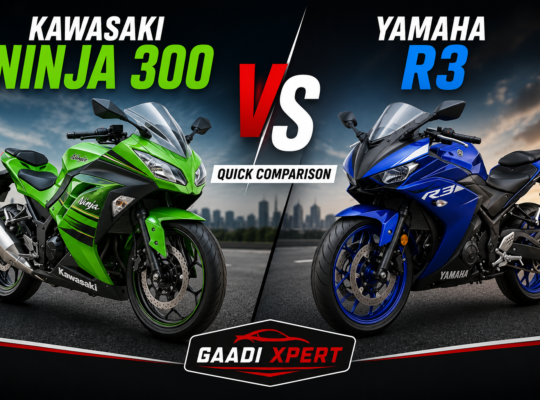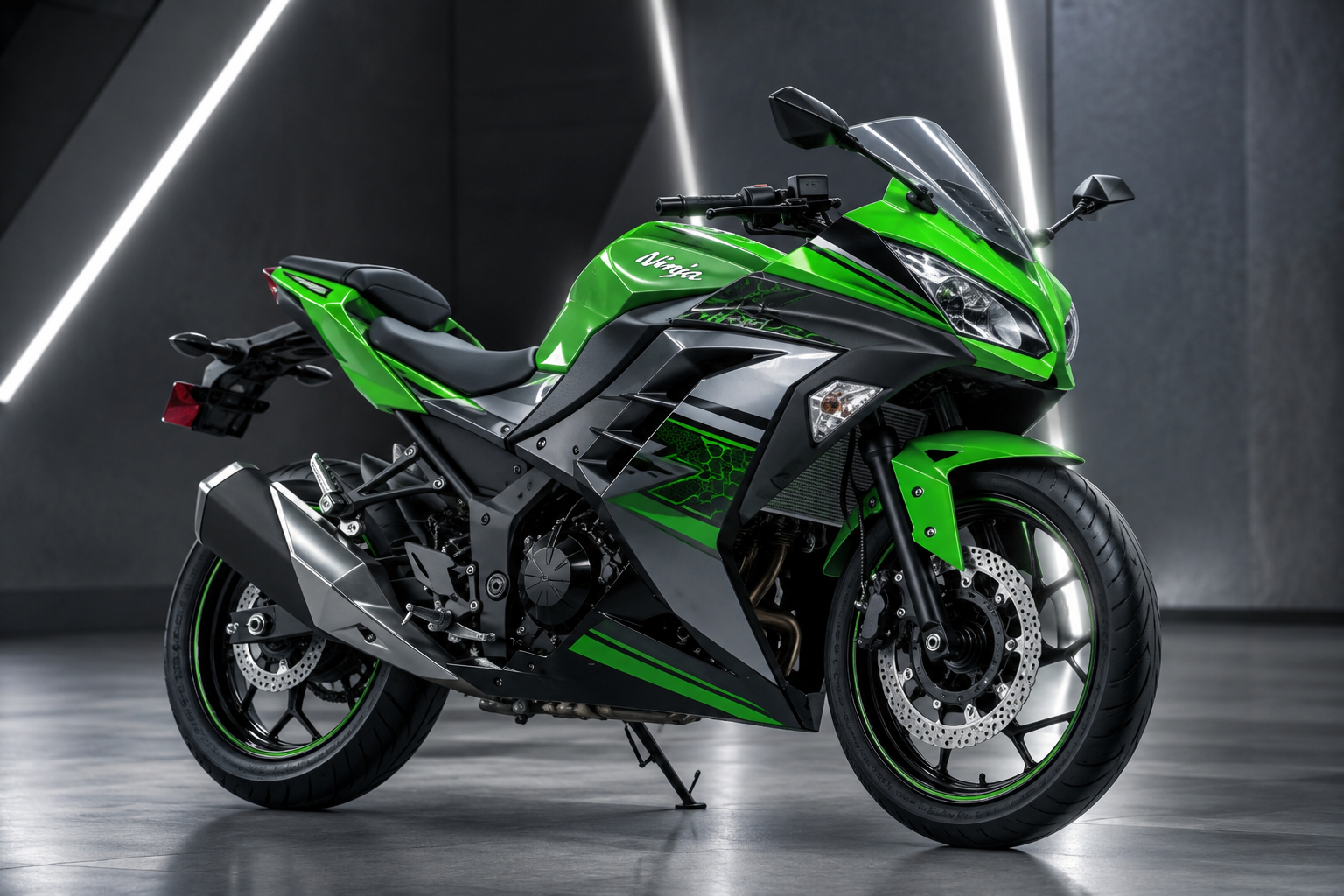
The Kawasaki Ninja 300 has been one of the most popular twin-cylinder sports bikes in India for many years. Riders who want a premium supersport motorcycle with smooth performance, reliable engineering, and attractive styling have always considered the Ninja 300 a strong option. Now, Kawasaki has introduced the updated 2027 model in the Indian market with a few meaningful improvements while keeping the proven mechanical package unchanged.
The latest Ninja 300 has been launched at an ex-showroom price of ₹3.34 lakh. Instead of giving the motorcycle a complete redesign, Kawasaki has focused on improving everyday usability and visual appeal. The bike now gets fresh graphics, improved tyres, and small refinements that make it feel more modern without changing the character that riders already appreciate.
Although many enthusiasts expected a major facelift or a larger engine, Kawasaki has chosen to continue with the trusted 296cc parallel-twin engine that has built an excellent reputation over the years. This means buyers still get the refined power delivery, comfortable riding position, and sporty handling that have made the Ninja 300 one of India’s most loved entry-level supersport motorcycles.
In this detailed review, we will explore everything about the new Kawasaki Ninja 300, including its latest price, design updates, features, engine specifications, performance, safety equipment, ownership experience, rivals, and whether it is worth buying in 2027.
Kawasaki Ninja 300 Price in India
One of the biggest highlights of the latest launch is its updated pricing.
| Variant | Ex-showroom Price |
|---|---|
| Kawasaki Ninja 300 Standard | ₹3.34 Lakh |
Compared to the previous model, the new Ninja 300 is priced around ₹17,000 higher. While the increase may disappoint some buyers, Kawasaki has added new tyres and cosmetic improvements to justify the revised price.
Depending on your city, the on-road price of the Ninja 300 is expected to range between ₹3.85 lakh and ₹4.05 lakh, including registration, insurance, and road tax.
Despite becoming slightly more expensive, the motorcycle remains one of the most affordable twin-cylinder sports bikes available in India.
Kawasaki Ninja 300 Colours
The updated Ninja 300 continues with Kawasaki’s signature racing-inspired appearance.
Available colour options include:
- Lime Green / Ebony
- Metallic Moondust Grey
- Updated dual-tone graphics
The fresh graphics make the motorcycle look more premium without changing its iconic Ninja identity. The aggressive green shade remains the most popular choice among buyers.
Kawasaki Ninja 300 Exterior Design
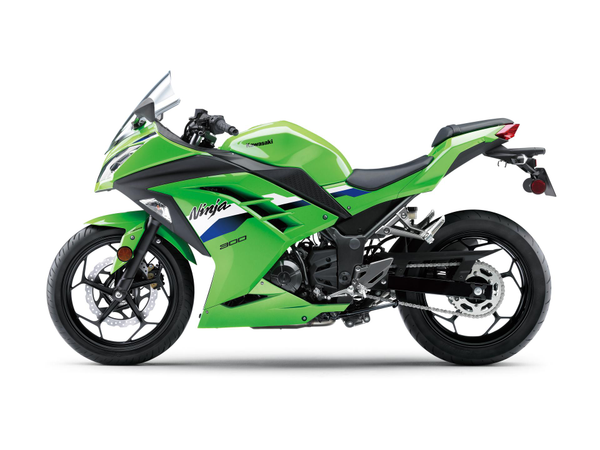
The design of the Ninja 300 has aged surprisingly well. Even after several years in the market, it still attracts attention wherever it goes.
Instead of redesigning the motorcycle completely, Kawasaki has refined the existing styling with updated graphics and cleaner detailing.
Aggressive Front Profile
The front end continues to feature the sharp twin-headlamp setup that gives the Ninja 300 an unmistakable supersport look.
The aerodynamic front fairing improves wind protection during highway rides while also enhancing the motorcycle’s premium appearance.
The large windscreen offers decent protection from wind blast at triple-digit speeds, making long-distance touring comfortable.
Sporty Side Profile
From the side, the Ninja 300 continues to look muscular and well-balanced.
Highlights include:
- Full fairing bodywork
- Sculpted fuel tank
- Split seats
- Stylish alloy wheels
- Sharp tail section
- Sporty riding stance
The proportions remain ideal for riders who want a genuine supersport appearance without sacrificing comfort.
Rear Styling
The rear section remains sleek and compact.
It features:
- LED tail lamp
- Split grab rails
- Sporty rear cowl
- Compact exhaust design
The updated graphics extend to the rear panels, giving the motorcycle a fresher appearance.
Build Quality
One area where the Kawasaki Ninja 300 continues to impress is overall build quality.
Panel fitment is excellent, paint quality feels premium, and the switchgear offers a solid tactile feel. The motorcycle has always been known for its durability, and the latest version maintains that reputation.
Owners who maintain their bikes properly often report trouble-free ownership even after several years.
Kawasaki Ninja 300 Features
While the Ninja 300 may not offer the latest electronic rider aids found on some rivals, it still provides all the essentials needed for enjoyable everyday riding.
Instrument Console
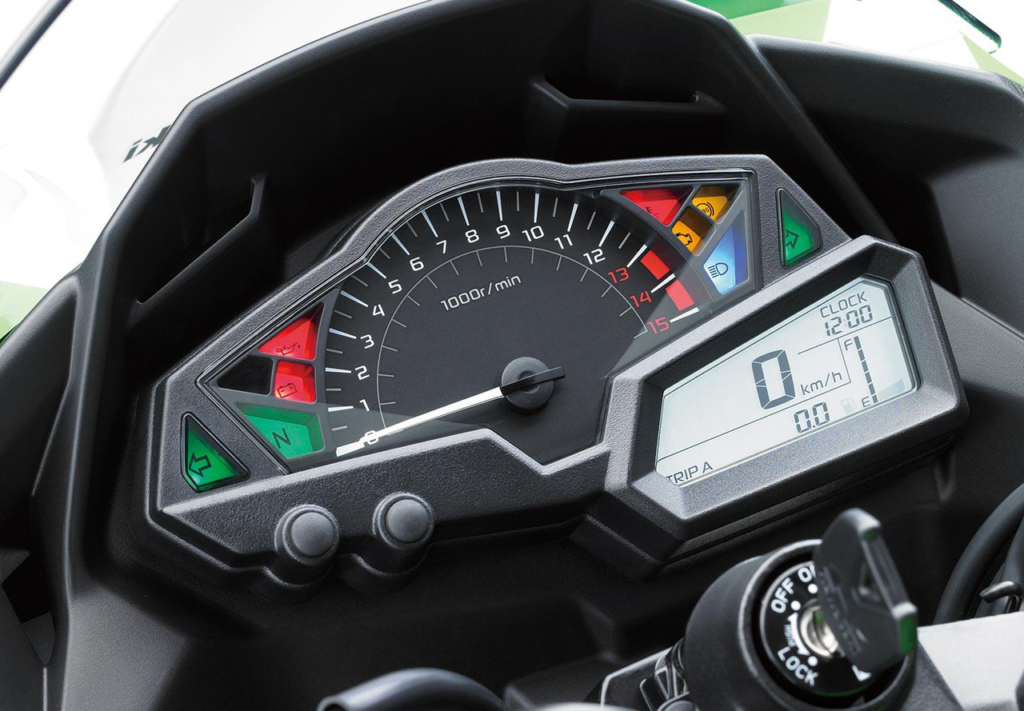
The motorcycle gets a semi-digital instrument cluster featuring:
- Analogue tachometer
- Digital speedometer
- Odometer
- Trip meter
- Fuel gauge
- Clock
- Warning indicators
The display remains easy to read in both daylight and night conditions.
Lighting
The Ninja 300 comes equipped with:
- Twin headlamps
- LED tail lamp
- Clear-lens indicators
The lighting setup provides good visibility while maintaining the motorcycle’s classic Ninja styling.
Riding Comfort
Unlike aggressive supersport motorcycles, the Ninja 300 offers a relatively comfortable riding posture.
Key comfort highlights include:
- Upright clip-on handlebars
- Comfortable split seat
- Manageable seat height
- Easy city riding ergonomics
- Suitable for weekend touring
This makes it an excellent option for riders upgrading from 150cc or 200cc motorcycles.
Everyday Practicality
Although designed as a sports motorcycle, the Kawasaki Ninja 300 performs well during daily commuting.
Its refined engine, predictable clutch, smooth gearbox, and comfortable ergonomics make traffic riding easier than many fully committed supersport motorcycles.
The fuel tank capacity is also sufficient for longer highway rides without frequent fuel stops.
What’s New in the 2027 Kawasaki Ninja 300?
The latest update may not look revolutionary, but it includes several noticeable improvements.
Major updates include:
- New graphics package
- Updated premium tyres
- Improved visual appeal
- Better road grip
- Latest model-year refinements
- Higher ex-showroom price
Mechanically, Kawasaki has retained the trusted 296cc parallel-twin engine, which continues to be one of the smoothest engines in its segment.
Kawasaki Ninja 300 Engine Specifications
The biggest strength of the Kawasaki Ninja 300 continues to be its refined parallel-twin engine. While many motorcycles in this price range use a single-cylinder setup, the Ninja 300 offers a premium twin-cylinder experience that delivers smoother power, less vibration, and a more enjoyable riding feel.
The motorcycle is powered by a 296cc liquid-cooled, parallel-twin, DOHC engine that has proven its reliability over the years. Kawasaki has retained this engine in the latest model because it remains one of the smoothest and most refined units in the entry-level supersport segment.
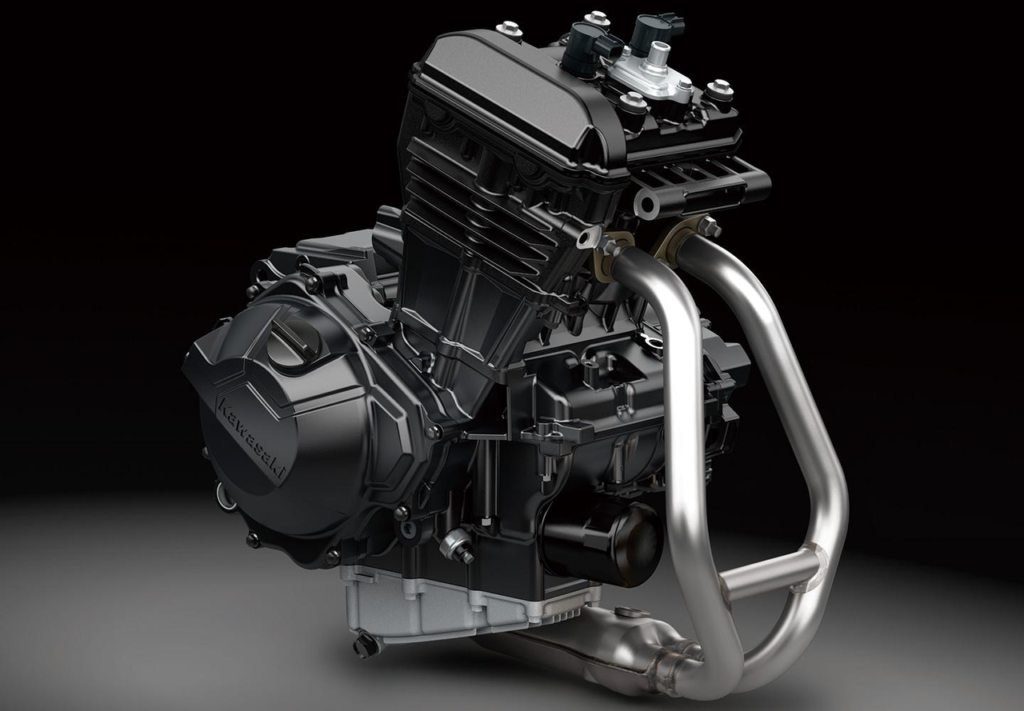
Engine Specifications
| Specification | Details |
|---|---|
| Engine | 296cc Parallel Twin |
| Cooling | Liquid-Cooled |
| Valve System | DOHC, 8-Valve |
| Maximum Power | 39 PS |
| Peak Torque | 26.1 Nm |
| Transmission | 6-Speed Manual |
| Clutch | Assist & Slipper Clutch |
| Fuel System | Fuel Injection |
| Emission Norm | OBD2B Compliant |
The engine of the Kawasaki Ninja 300 is designed to provide strong mid-range performance while remaining smooth at higher RPMs. Whether you are riding in city traffic or cruising on the highway, the power delivery feels predictable and refined.
Kawasaki Ninja 300 Performance
Performance has always been one of the biggest reasons why enthusiasts choose the Ninja 300 over many of its rivals.
Unlike high-revving single-cylinder motorcycles that can become buzzy at higher speeds, the twin-cylinder engine of the Ninja 300 remains smooth throughout the rev range.
Acceleration
The motorcycle accelerates confidently thanks to its linear power delivery.
Performance highlights include:
- Smooth throttle response
- Strong mid-range acceleration
- Comfortable cruising speeds
- Excellent highway performance
- Minimal engine vibrations
The Kawasaki Ninja 300 can comfortably maintain highway speeds for long distances without putting excessive stress on the engine.
Top Speed
The Kawasaki Ninja 300 is capable of reaching a top speed of around 160–170 km/h under suitable riding conditions. More importantly, it remains stable and composed even while cruising at triple-digit speeds, making it a practical sports motorcycle for touring enthusiasts.
Gearbox Experience
Another strong point of the Kawasaki Ninja 300 is its slick 6-speed gearbox.
Gear shifts feel precise and smooth, while the Assist & Slipper Clutch reduces clutch effort and prevents rear-wheel hopping during aggressive downshifts.
Benefits include:
- Light clutch operation
- Smooth gear changes
- Better rider confidence
- Reduced fatigue in traffic
- Improved control during spirited riding
Kawasaki Ninja 300 Mileage
Fuel efficiency is often an important consideration for buyers planning to use a sports motorcycle regularly.
The Ninja 300 offers respectable mileage considering its twin-cylinder engine.
Expected Mileage
| Riding Condition | Mileage |
|---|---|
| City | 24–26 km/l |
| Highway | 28–31 km/l |
| Combined | Around 27 km/l |
Actual mileage depends on riding style, traffic conditions, maintenance, and road quality.
If ridden sensibly, the Kawasaki Ninja 300 can easily deliver enough range for weekend rides without frequent fuel stops.
Kawasaki Ninja 300 Ride Quality
One of the reasons behind the long-standing popularity of the Ninja 300 is its balanced ride quality.
Unlike track-focused supersport motorcycles that compromise comfort, the Ninja manages to combine sporty handling with everyday usability.
City Riding
The motorcycle feels surprisingly manageable in urban conditions.
Advantages include:
- Predictable throttle response
- Comfortable ergonomics
- Light clutch
- Smooth engine
- Good low-speed balance
Daily commuting becomes much easier than many riders initially expect.
Highway Touring
The Kawasaki Ninja 300 truly shines on highways.
Its refined engine, aerodynamic fairing, and relaxed cruising ability make long-distance rides enjoyable.
Highway benefits include:
- Stable at high speeds
- Excellent wind protection
- Comfortable riding posture
- Smooth power delivery
- Low engine stress during cruising
For riders who enjoy weekend touring, the Ninja 300 continues to be one of the most practical twin-cylinder sports motorcycles available in India.
Kawasaki Ninja 300 Suspension Setup
Kawasaki has retained the proven suspension setup that offers a good balance between comfort and handling.
Front Suspension
- Telescopic Fork
Rear Suspension
- Bottom-Link Uni-Trak Gas-Charged Monoshock
The suspension absorbs most road imperfections comfortably while maintaining stability during cornering.
Although the setup is not adjustable, it performs well for city roads, highways, and occasional spirited riding.
Kawasaki Ninja 300 Handling
Handling has always been one of the strongest qualities of the Kawasaki Ninja 300.
The lightweight chassis and balanced weight distribution make the motorcycle easy to control.
Key handling characteristics include:
- Confident cornering
- Stable high-speed behaviour
- Easy lane changes
- Predictable steering
- Excellent rider confidence
Whether you are a beginner entering the twin-cylinder segment or an experienced rider looking for a refined sports motorcycle, the Kawasaki Ninja 300 offers a reassuring riding experience.
Kawasaki Ninja 300 Braking Performance
The braking setup provides enough stopping power for both city riding and highway use.
Braking Hardware
- Front Disc Brake
- Rear Disc Brake
- Dual-Channel ABS
The ABS system helps prevent wheel lock during emergency braking and improves overall rider confidence on wet or slippery roads.
Brake feel is progressive, allowing riders to modulate braking force effectively without feeling overly aggressive.
Kawasaki Ninja 300 Safety Features
Although the Kawasaki Ninja 300 does not offer advanced electronic rider aids like traction control or multiple riding modes, it still includes several important safety features.
Standard Safety Equipment
- Dual-Channel ABS
- Assist & Slipper Clutch
- Wide Tubeless Tyres
- Stable Twin-Spar Chassis
- Powerful Disc Brakes
- Bright Lighting Setup
- Predictable Power Delivery
These features make the Kawasaki Ninja 300 approachable for new riders while still offering enough capability for experienced enthusiasts.
Kawasaki Ninja 300 Ownership Experience
The Kawasaki Ninja 300 has built a reputation for reliability when serviced according to the manufacturer’s schedule.
Owners generally appreciate:
- Smooth engine performance
- Strong build quality
- Reliable mechanical components
- Comfortable touring capability
- Premium riding feel
Routine maintenance costs are higher than most single-cylinder motorcycles, but that is expected from a premium twin-cylinder sports bike.
If maintained properly, the Kawasaki Ninja 300 can deliver years of dependable performance.
Kawasaki Ninja 300 Pros and Cons
Every motorcycle has its strengths and limitations, and the Kawasaki Ninja 300 is no exception. The latest model continues with the same proven formula while adding small improvements that enhance the ownership experience.
Pros
- Refined 296cc parallel-twin engine
- Smooth and vibration-free performance
- Comfortable riding position for daily use
- Premium fit and finish
- Assist & Slipper Clutch as standard
- Dual-channel ABS for better safety
- Stable handling at highway speeds
- Strong brand value and resale
- Attractive supersport styling
- Suitable for city rides as well as touring
Cons
- No TFT display
- No traction control
- No riding modes
- Suspension is not adjustable
- Higher maintenance cost than single-cylinder rivals
- Price has increased compared to the previous model
Kawasaki Ninja 300 Maintenance & Ownership Cost
Buying a premium motorcycle is not only about the purchase price. Long-term ownership also matters.
The Kawasaki Ninja 300 is known for its dependable engine, but regular servicing at an authorised dealership is important to keep it performing at its best.
Ownership Highlights
- Good long-term reliability
- Widely available genuine spare parts
- Strong service support in major cities
- Premium build quality
- Excellent engine durability with scheduled maintenance
Routine service costs are naturally higher than entry-level sports bikes because the Kawasaki Ninja 300 uses a twin-cylinder engine. However, most owners consider the refinement and performance worth the additional maintenance expense.
Kawasaki Ninja 300 Rivals
The Indian entry-level supersport segment has become more competitive than ever. Even so, the Kawasaki Ninja 300 continues to attract buyers who prefer a smooth twin-cylinder engine and Kawasaki’s proven reliability.
Yamaha R3
The Yamaha R3 offers excellent refinement and sharp handling. It is lighter and more modern in some areas, but it is also priced at a premium.
Aprilia RS 457
The Aprilia RS 457 delivers stronger performance, modern electronics, and a fresh design. Riders looking for higher power may prefer it, while those wanting a mature and reliable package may still choose the Kawasaki Ninja 300.
KTM RC 390
The KTM RC 390 provides aggressive performance, advanced electronics, and a feature-rich package. However, its riding posture is more committed than the relatively comfortable Kawasaki Ninja 300.
Comparison at a Glance
| Motorcycle | Engine | Character |
|---|---|---|
| Kawasaki Ninja 300 | 296cc Twin | Smooth & Touring Friendly |
| Yamaha R3 | 321cc Twin | Refined & Sporty |
| Aprilia RS 457 | 457cc Twin | Powerful & Feature Rich |
| KTM RC 390 | 399cc Single | Aggressive Performance |
Should You Buy the Kawasaki Ninja 300?
The answer depends on what type of rider you are.
Choose the Kawasaki Ninja 300 if you want:
- A refined twin-cylinder engine
- Comfortable everyday usability
- Reliable long-term ownership
- Weekend touring capability
- Premium Kawasaki quality
- A motorcycle that is easy to ride and confidence inspiring
You may want to consider other options if your priority is:
- Maximum performance
- Advanced electronics
- Riding modes
- Traction control
- TFT instrument display
- Better value through more features
Even in 2027, the Kawasaki Ninja 300 remains one of the best choices for riders who value refinement over outright specifications.
⭐ Gaadi Xpert Verdict
The updated Kawasaki Ninja 300 proves that a well-engineered motorcycle does not always need a complete redesign to remain relevant. Instead of changing its successful formula, Kawasaki has refined the package with fresh graphics, improved tyres, and the same trusted 296cc parallel-twin engine.
While some competitors now offer more electronic features and larger engines, the Kawasaki Ninja 300 still stands out because of its smooth performance, premium quality, and comfortable riding experience. It remains an ideal motorcycle for riders upgrading from 150cc or 200cc bikes and for enthusiasts looking for a dependable twin-cylinder sports machine.
If your priority is a refined engine, predictable handling, and proven reliability rather than a long list of electronic features, the Kawasaki Ninja 300 deserves a place on your shortlist.
⭐ Gaadi Xpert Score Card
| Category | Rating |
|---|---|
| Design | ⭐⭐⭐⭐⭐ (4.7/5) |
| Performance | ⭐⭐⭐⭐⭐ (4.8/5) |
| Engine Refinement | ⭐⭐⭐⭐⭐ (5/5) |
| Ride Comfort | ⭐⭐⭐⭐☆ (4.5/5) |
| Handling | ⭐⭐⭐⭐⭐ (4.7/5) |
| Features | ⭐⭐⭐⭐☆ (4.1/5) |
| Safety | ⭐⭐⭐⭐☆ (4.5/5) |
| Value for Money | ⭐⭐⭐⭐☆ (4.2/5) |
Overall Rating: ⭐⭐⭐⭐☆ (4.6/5)
Frequently Asked Questions (FAQs)
1. What is the price of the Kawasaki Ninja 300 in India?
The latest Kawasaki Ninja 300 is priced at ₹3.34 lakh (ex-showroom).
2. What engine does the Kawasaki Ninja 300 use?
The Kawasaki Ninja 300 is powered by a 296cc liquid-cooled parallel-twin engine producing 39 PS of power and 26.1 Nm of torque.
3. Does the Kawasaki Ninja 300 get dual-channel ABS?
Yes. The Kawasaki Ninja 300 comes with dual-channel ABS as standard.
4. What is the mileage of the Kawasaki Ninja 300?
The Kawasaki Ninja 300 delivers an expected mileage of around 24–31 km/l, depending on riding conditions.
5. Is the Kawasaki Ninja 300 good for beginners?
Yes. The smooth engine, comfortable ergonomics, predictable handling, and light clutch make the Kawasaki Ninja 300 beginner-friendly for riders moving to the twin-cylinder segment.
6. What are the main rivals of the Kawasaki Ninja 300?
Major rivals include the Yamaha R3, Aprilia RS 457, and KTM RC 390.
7. Is the Kawasaki Ninja 300 suitable for touring?
Yes. Thanks to its refined twin-cylinder engine, comfortable riding posture, aerodynamic fairing, and stable highway manners, the Kawasaki Ninja 300 is an excellent option for weekend touring and long-distance rides.
Final Conclusion
The Kawasaki Ninja 300 continues to prove why it has remained one of India’s most respected entry-level supersport motorcycles. Although the 2027 update focuses mainly on cosmetic enhancements and improved tyres, the motorcycle retains everything riders have appreciated over the years—a refined parallel-twin engine, confidence-inspiring handling, premium build quality, and everyday usability. For buyers who want a dependable, comfortable, and enjoyable sports bike rather than chasing the highest specifications on paper, the Kawasaki Ninja 300 remains a smart purchase and a worthy member of Kawasaki’s iconic Ninja family.
Also Read About YAMAHA FZS