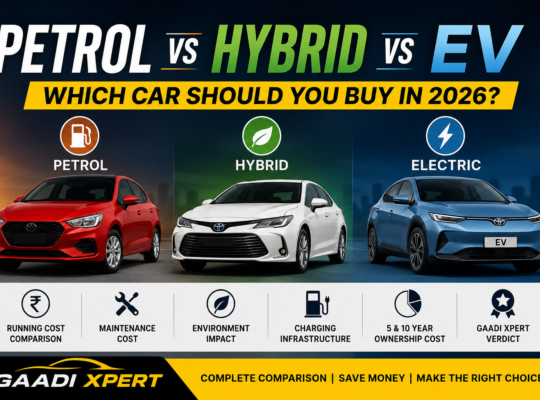
Hybrid Cars In India : India’s car market is going through a noticeable change in 2026. For years, petrol cars dominated the passenger-vehicle market, while diesel gradually lost ground. Now, however, buyers have more choices than ever before, including CNG, electric and hybrid powertrains.
The latest numbers show just how quickly this shift is happening. In August 2026, CNG, hybrid and electric passenger vehicles together accounted for around 42% of retail car sales, moving ahead of petrol cars at 41% for the first time. Petrol’s share had been 46% a year earlier.
That does not mean hybrid cars alone have overtaken petrol cars. Instead, it shows that Indian buyers are increasingly comfortable with alternatives to a conventional petrol engine.
Among these options, hybrid cars in India are becoming particularly interesting because they offer a middle path between petrol and fully electric vehicles.
So, what is driving this change? And are hybrid cars really becoming the next big thing for Indian buyers?
Let’s take a closer look.
What Is Driving the Rise of Hybrid Cars in India?
The growing popularity of hybrid cars is not happening because of one single reason. Instead, several factors are coming together at the same time.
Fuel costs remain an important concern for private car owners. At the same time, many buyers want better fuel efficiency without changing their driving habits completely.
This is where a hybrid powertrain makes sense.
A strong hybrid combines a petrol engine with an electric motor and battery. Depending on the system and driving conditions, the car can use the electric motor, the petrol engine or both.
As a result, the engine does not have to work continuously in situations where an electric motor can do the job more efficiently.
For city driving, this can be especially useful because frequent braking, acceleration and low-speed movement give the hybrid system more opportunities to use electric assistance.
August 2026 Shows a Bigger Change in India’s Car Market
The latest August numbers provide perhaps the clearest indication that Indian buyers are becoming more open to alternative powertrains.
According to data reported from industry analysis, CNG, hybrid and EV models together reached around 42% of passenger-vehicle retail sales in August. Petrol cars accounted for about 41%. { REUTERS }
The overall passenger-vehicle market was also strong. Retail passenger-vehicle sales were reported at around 4.01 lakh units in August, up roughly 16% year over year.
The interesting part is that this change is not simply an EV story.
CNG continues to attract buyers looking for lower running costs. EVs are gaining acceptance as more models become available. At the same time, hybrids are offering buyers another option that does not require them to depend entirely on charging infrastructure.
That combination is changing the balance of the Indian car market.
Why Hybrid Cars Are Attractive to Indian Buyers
One of the biggest advantages of hybrid cars is that they do not require a completely different ownership experience.
With a conventional EV, buyers need to think about charging locations, home charging and longer-trip planning.
A strong hybrid, on the other hand, can be refuelled like a normal petrol car.
That makes the technology easier to understand for buyers who are interested in electrification but are not ready to make the complete switch to an EV.
There is also another important advantage: efficiency.
A hybrid system can recover energy during braking and use it later. In traffic, the electric motor can also reduce the amount of work required from the petrol engine.
This can result in significantly better fuel efficiency than a conventional petrol-only vehicle, although the actual mileage depends on the model, traffic conditions, driving style and road conditions.
Toyota Has Built a Strong Lead in the Hybrid Segment
When talking about hybrid cars in India, it is difficult to ignore Toyota.
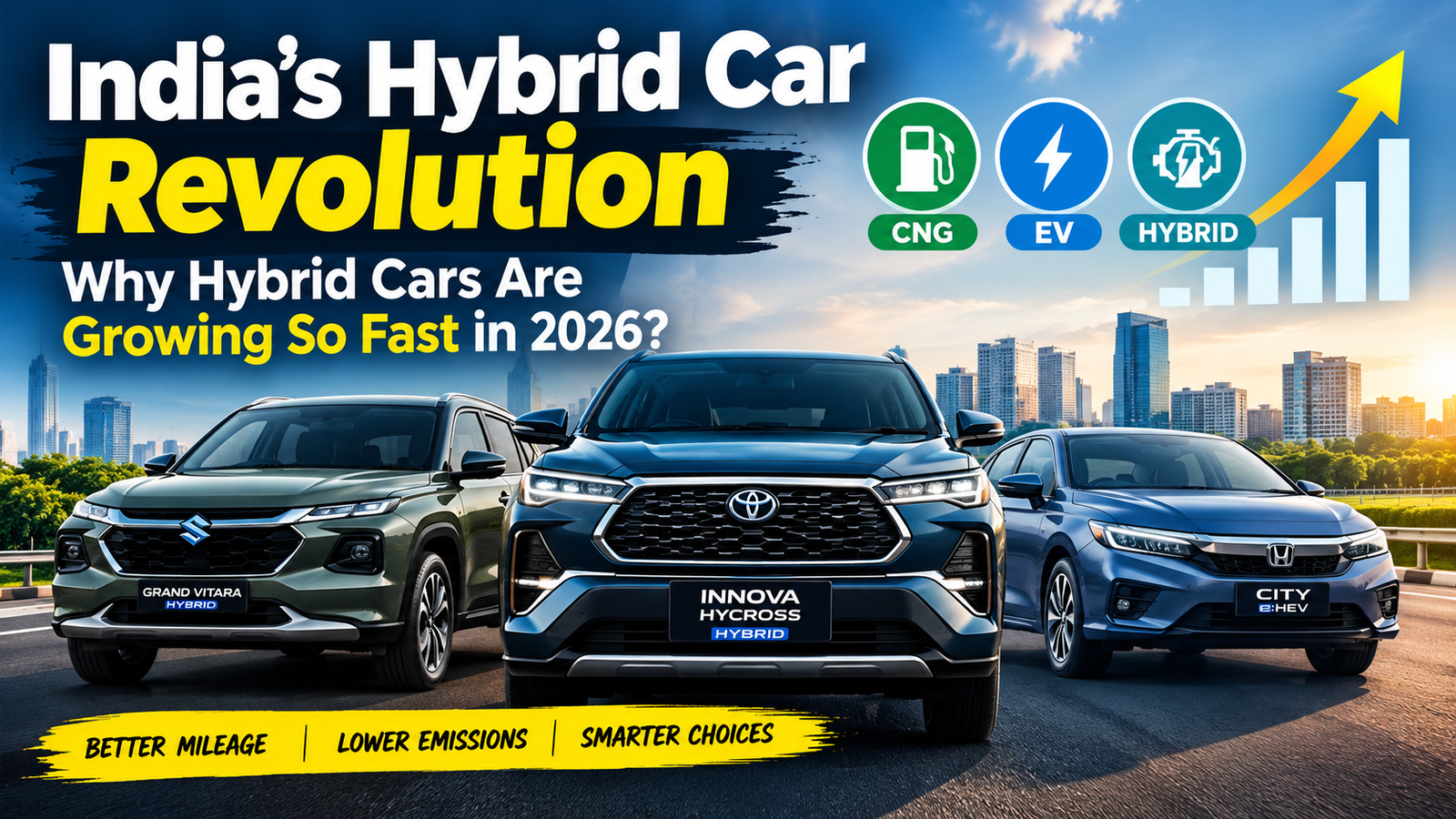
Toyota has established a strong position in the country’s hybrid market with models such as the Innova Hycross and Urban Cruiser Hyryder.
Data compiled for FY2026 shows the Toyota Innova Hycross leading the strong-hybrid segment with 62,586 units, followed by the Urban Cruiser Hyryder with 35,745 units. The Maruti Suzuki Grand Vitara was third with 11,739 units.
The numbers highlight an important point.
Indian consumers are not only buying hybrids in small numbers as expensive technology products. They are increasingly choosing them in mainstream SUV and MPV segments.
That gives hybrid technology a much stronger foundation in the market.
Maruti Suzuki Is Making Hybrids More Accessible
Maruti Suzuki has also played an important role in bringing hybrid technology into a more mainstream price bracket.
The Grand Vitara is one of the most visible examples. The company also offers hybrid technology through models developed under its broader partnership with Toyota.
This matters because Maruti Suzuki has a huge customer base across India.
When a technology reaches a brand with such a large distribution and service network, it becomes easier for customers in smaller cities and towns to consider it.
In other words, hybrid technology is no longer limited to premium buyers.
Honda Is Also Part of the Hybrid Story
Honda has taken a different approach with the City e:HEV.
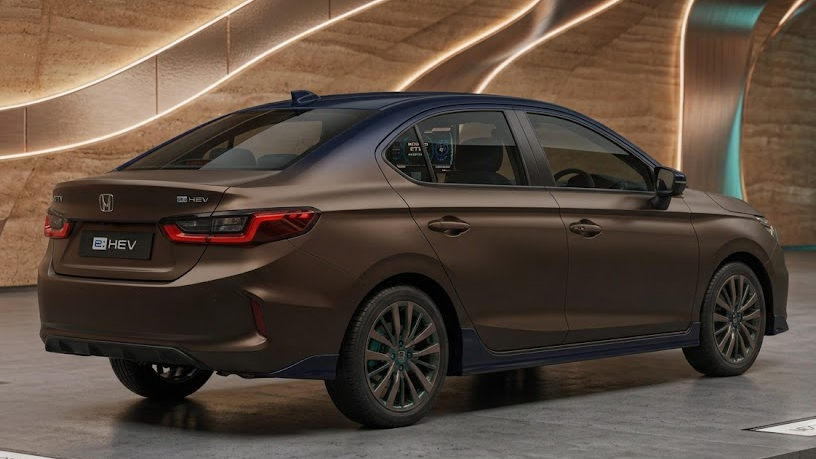
The City e:HEV combines a petrol engine with an electric motor system and targets buyers who want sedan comfort along with strong efficiency.
Its sales volumes are much smaller than Toyota’s leading hybrid models, but Honda’s presence shows that the technology is not limited to SUVs and MPVs.
It also gives buyers another choice in the premium sedan segment.
Also Read The Genuine Reveiw Of HONDA CITY e;HEV
Strong Hybrid vs Mild Hybrid: Why the Difference Matters
There is an important detail that buyers should understand before choosing a hybrid.
Not every vehicle marketed with hybrid technology works in the same way.
A mild hybrid generally uses a smaller electrical system to assist the petrol engine. It can improve efficiency and support functions such as engine stop-start, but it usually cannot drive the car on electric power for meaningful distances.
A strong hybrid, however, has a more capable electric motor and battery system. Under suitable conditions, it can operate the vehicle using electric power for short periods.
That difference can have a significant impact on real-world fuel efficiency.
Recent August data also showed that mild hybrids were growing strongly, while strong hybrids had a different sales trend during the month. This is why simply looking at the word “hybrid” can sometimes give an incomplete picture of the market.
Hybrid vs Petrol: Which One Makes More Sense?
For buyers who mainly drive short distances and have relatively low annual usage, a conventional petrol car can still make financial sense.
The initial price is usually lower, and the ownership equation is straightforward.
However, buyers who drive frequently in city traffic may find a strong hybrid more attractive.
The higher upfront cost can potentially be balanced by better fuel efficiency over a longer ownership period.
Therefore, the right question is not simply whether a hybrid gives better mileage.
The better question is:
How many kilometres will you drive every year, and how long do you plan to keep the car?
Someone driving 8,000 km a year may see a very different ownership equation from someone covering 20,000–25,000 km annually.
Hybrid vs EV: The Biggest Debate of 2026
This is where things become interesting.
EVs have a major advantage in running efficiency because they do not use a petrol engine for propulsion. They also offer instant torque and a quieter driving experience.
India’s EV market is growing rapidly. In August 2026, electric passenger-vehicle registrations reportedly reached 30,325 units, up 50% year over year, although they were lower than July’s 34,561 units. EVs represented around 7.4% of passenger-vehicle registrations during the month.
However, EV adoption still depends on factors such as charging access, driving patterns and individual requirements.
That is where a hybrid can become a practical compromise.
You get electric assistance and improved efficiency, but you still have the convenience of a petrol engine for long-distance travel.
For buyers who regularly travel between cities, this can be a major advantage.
Are Hybrid Cars Really the Future of India?
It would be too early to say that hybrid cars will completely replace petrol or EVs.
The Indian market is likely to remain a mix of different technologies for quite some time.
CNG will continue to attract buyers focused on running costs.
EVs will continue growing as charging infrastructure and model availability improve.
Petrol cars will remain relevant because of their simplicity and wide availability.
Hybrids, meanwhile, could occupy the middle ground.
That middle ground may actually be one of their biggest strengths.
Why Automakers Are Paying More Attention to Hybrids
Automakers are under pressure to improve fuel efficiency and reduce emissions while still offering products that customers are willing to buy.
An EV is one solution, but it is not the only solution.
Hybrid technology allows manufacturers to reduce fuel consumption without completely changing the customer’s driving experience.
The strong sales of Toyota’s hybrid models and growing interest from Maruti Suzuki and Honda show that manufacturers see a real market opportunity. Earlier FY2026 data also showed strong growth in hybrid sales among Toyota, Maruti Suzuki and Honda.
As more manufacturers introduce electrified powertrains, competition could also make hybrid technology more accessible.
The Biggest Problem With Hybrid Cars
Hybrid technology is not perfect.
The biggest concern for many buyers is the higher purchase price compared with an equivalent petrol model.
The technology is also more complicated than a conventional petrol powertrain because it combines an engine, electric motor, battery and control systems.
Battery replacement is another question buyers often ask.
Modern hybrid batteries are designed for long-term use, but their eventual replacement can still be an expensive repair. Therefore, buyers should check the manufacturer’s warranty coverage and battery warranty before making a decision.
Maintenance should also be considered over the full ownership period rather than only looking at fuel savings.
Will Hybrid Cars Beat Petrol Cars?
The August 2026 market data has already shown that India’s overall shift away from petrol is real.
However, it is important not to misread the numbers.
Hybrid cars alone did not take 42% of the market. The 42% figure represents CNG, hybrid and EV passenger vehicles combined. Petrol accounted for around 41%.
Still, the result is significant.
It tells manufacturers that Indian consumers are becoming much more comfortable with alternative powertrains.
For hybrid technology, that is an encouraging sign.
What Could Happen Next?
The next few years could be particularly interesting for hybrid cars in India.
If fuel prices remain a concern and consumers continue looking for better efficiency, hybrids could gain more attention.
At the same time, falling battery costs, better charging infrastructure and more EV launches will keep pressure on hybrid technology.
The result could be a very competitive market where petrol, CNG, hybrid and EV cars all fight for different types of customers.
Rather than one technology completely replacing everything else, India could end up with a mixed powertrain market.
That may actually be better for consumers.
More competition means more choices.
Should You Buy a Hybrid Car in 2026?
A hybrid can make sense if you:
- Drive regularly in city traffic.
- Want better fuel efficiency without switching completely to an EV.
- Frequently travel long distances.
- Do not have convenient home charging.
- Plan to keep the car for several years.
- Are comfortable paying a higher upfront price for potentially lower fuel consumption.
On the other hand, a hybrid may not be the best choice if you drive very little every year or if the price difference compared with the petrol version is too large.
In those situations, a conventional petrol car can still be the more sensible financial choice.
Gaadi Xpert Verdict
India’s car market is clearly changing, but the hybrid story needs to be understood without exaggeration.
The biggest development in August 2026 was not that hybrid cars suddenly defeated petrol cars. Instead, CNG, hybrid and EV vehicles together crossed petrol’s share of passenger-vehicle sales for the first time.
That is a much bigger story.
It shows that Indian buyers are no longer looking at just petrol or diesel when choosing their next car.
For many customers, hybrid technology offers a practical bridge between traditional petrol cars and fully electric vehicles. It provides better efficiency while keeping the familiar convenience of petrol refuelling.
At Gaadi Xpert, our view is simple: hybrid cars are not necessarily the final destination, but they have become one of the most important powertrain choices in India’s automotive market.
And if the current trend continues, 2026 could be remembered as the year when alternative powertrains stopped being niche choices and started becoming mainstream.
Gaadi Xpert Score Card
| Factor | Rating |
|---|---|
| Fuel Efficiency Potential | ⭐⭐⭐⭐⭐ |
| City Driving | ⭐⭐⭐⭐⭐ |
| Long-Distance Convenience | ⭐⭐⭐⭐⭐ |
| Charging Dependence | ⭐⭐⭐⭐⭐ |
| Initial Purchase Cost | ⭐⭐⭐ |
| Future Relevance | ⭐⭐⭐⭐⭐ |
| Overall | 4.5/5 |
FAQs
Are hybrid cars growing in India in 2026?
Yes. Hybrid demand has been growing, although the pace varies between mild and strong hybrids. Toyota remains a major player, while Maruti Suzuki and Honda also have hybrid offerings.
Did hybrid cars alone overtake petrol cars in August 2026?
No. In August 2026, CNG, hybrid and EV passenger vehicles together accounted for around 42% of sales, compared with around 41% for petrol vehicles.
Which company dominates India’s hybrid car market?
Toyota has a strong lead in India’s strong-hybrid segment, with the Innova Hycross and Urban Cruiser Hyryder among the segment’s highest-volume models.
Are hybrid cars better than EVs?
It depends on the buyer. EVs can offer lower running costs and zero tailpipe emissions, while hybrids offer greater refuelling convenience and can be easier for buyers who frequently travel long distances.
Are hybrid cars worth buying in 2026?
For buyers who drive regularly and want better fuel efficiency without depending on charging infrastructure, a hybrid can be a sensible option. However, the higher purchase price should be compared with the expected fuel savings.
Will hybrid cars replace petrol cars in India?
It is unlikely that one technology will replace every other powertrain in the near future. Petrol, CNG, hybrid and EVs are likely to coexist, with each serving different customer needs.