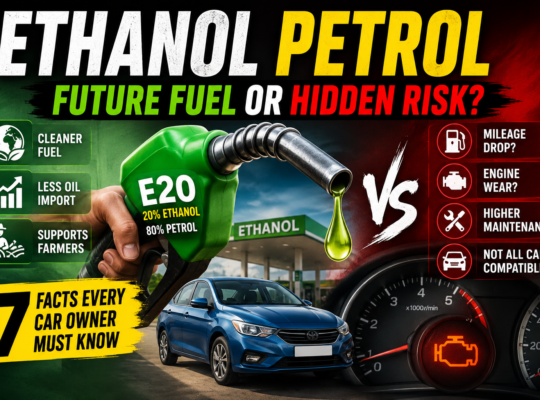
Ethanol Fuel :- India is gradually shifting towards ethanol-blended fuel to reduce its dependence on imported crude oil. The government has already introduced E20 petrol in many cities and is also preparing for higher ethanol fuels in the future.
While some people see ethanol as a smart and affordable solution, others are worried about mileage, engine life and long-term maintenance costs.
So, should car owners be worried ?
Let’s understand it in a simple way.
Have you ever wondered whether the fuel you are putting into your car today could completely change the future of driving in India? Over the past few months, ethanol fuel has become one of the most discussed topics among car owners, experts and automobile companies. Some people believe it will reduce fuel costs and make India less dependent on imported oil, while others are worried about mileage, engine life and long-term maintenance expenses. With E20 petrol already reaching many fuel stations and higher ethanol blends being planned, millions of vehicle owners are asking one simple question:
Is ethanol really beneficial for our cars, or could it create new challenges in the future? In this article, we will explain everything in a simple and fact-based way so that every car owner can understand the real picture.
What Is Ethanol Fuel?
Ethanol is a biofuel made from crops like sugarcane, corn and agricultural waste.
Instead of using only petrol, a certain percentage of ethanol is mixed with petrol.
There are different types:
- E20 = 20% Ethanol + 80% Petrol
- E85 = 85% Ethanol + 15% Petrol
- E100 = 100% Ethanol
Currently, E20 petrol is becoming common in India.
Why Is India Promoting Ethanol Fuel?
There are three main reasons.
1. Reduce Oil Imports
India imports a large amount of crude oil every year.
Using ethanol can reduce the country’s dependence on foreign oil.
2. Support Farmers
Ethanol production creates additional demand for sugarcane and grains, helping farmers earn more income.
3. Reduce Pollution
Ethanol burns cleaner than traditional petrol and can help reduce carbon emissions.
{ Also Read Jaguar all new electric cars datiled review }
Benefits Of Ethanol Fuel
Lower Dependence On Foreign Oil
India can save billions of rupees by reducing crude oil imports.
Better For The Environment
Ethanol produces fewer harmful emissions than regular petrol.
More Opportunities For Farmers
The agriculture sector may benefit from increased ethanol demand.
Future Fuel Option
Ethanol can work alongside EVs, hybrids and CNG vehicles.
Drawbacks Of Ethanol Fuel
Slightly Lower Mileage
Ethanol contains less energy than petrol.
Many vehicles may deliver 1-3% lower mileage with E20 fuel.
Older Vehicles May Face Issues
Cars not designed for E20 could experience:
- Fuel pipe wear
- Rubber seal damage
- Reduced efficiency
Always check your vehicle manual before using higher ethanol blends.
Higher Water Usage
Sugarcane farming requires a large amount of water.
This may become a challenge in drought-prone areas.
Food Vs Fuel Concern
Some experts worry that using food crops for fuel production could create future agricultural pressure.
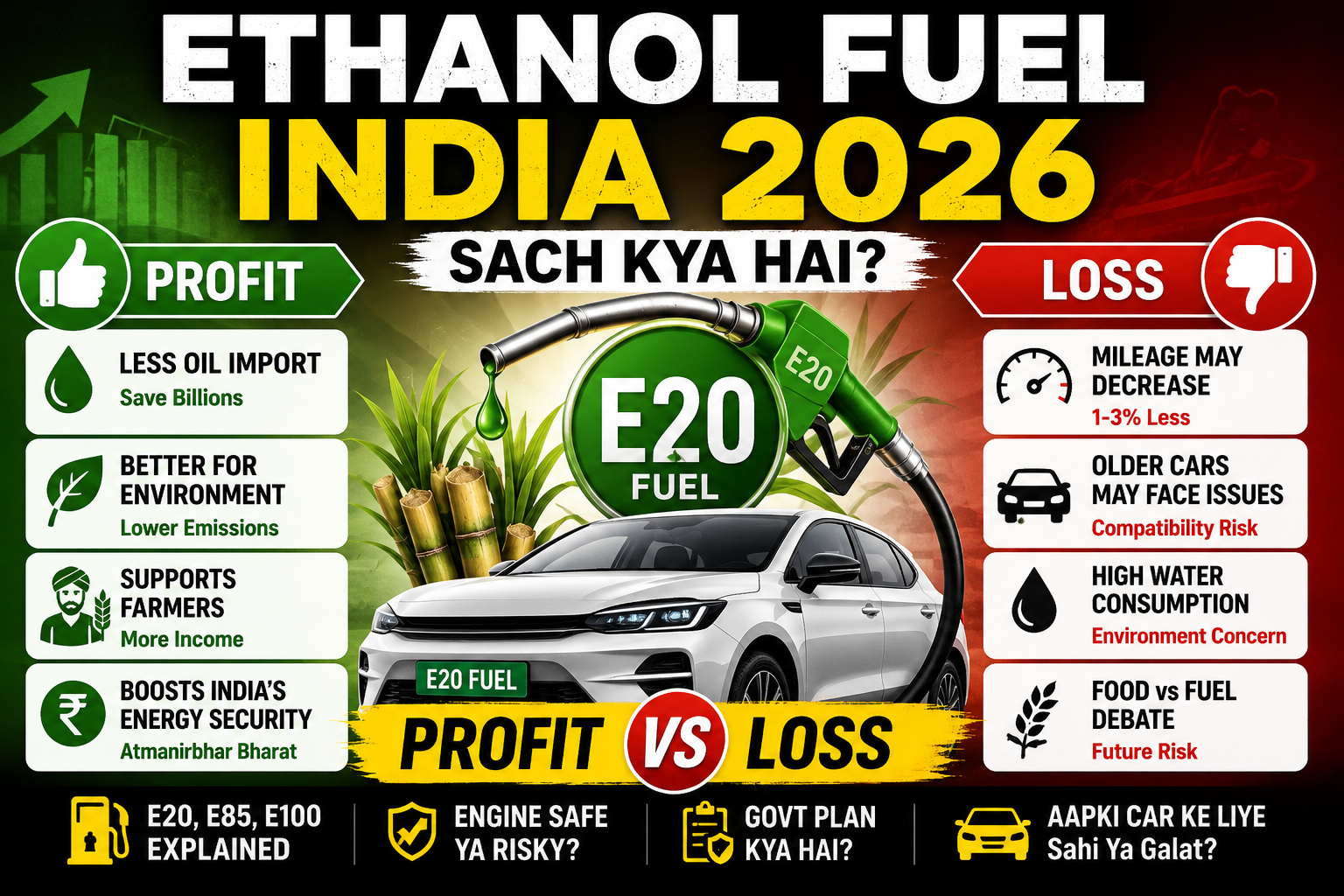
Profit Vs Loss Of Ethanol Fuel :-
| Profit | Loss |
|---|---|
| Reduces oil imports | Mileage may decrease slightly |
| Supports Indian farmers | Older vehicles may face compatibility issues |
| Cleaner fuel with lower emissions | Sugarcane farming uses a lot of water |
| Strengthens energy security | Food crop usage is a concern |
| Creates new employment opportunities | Infrastructure still needs improvement |
Will Every Vehicle Support Ethanol Fuel?
No.
Older vehicles may not be fully compatible.
Most manufacturers now sell E20-compatible vehicles.
Always check:
- Owner’s manual
- Manufacturer website
- Fuel compatibility label
Never use higher ethanol blends if your vehicle is not approved for them.
Is Ethanol Better Than EV?
Not exactly.
Both have different purposes.
Electric Vehicles (EVs)
- Zero tailpipe emissions
- Depend on charging infrastructure
- Higher initial price
Ethanol Vehicles
- Easy to refuel
- Use existing petrol stations
- More affordable for many buyers
Experts believe both technologies will grow together.
What Is India’s Future Plan?
India is already using E20 fuel in many areas.
The government is also encouraging:
- Flex-fuel vehicles
- E85 fuel
- E100 fuel
However, this transition will happen gradually over the next few years.
Source : Ministry of Petroleum & Natural Gas