Ethanol Petrol : For years, petrol quality was never a major topic of discussion among Indian car owners. But today, Ethanol Petrol has become one of the most debated subjects in the automobile industry. Some experts believe it is the future of cleaner mobility, while many vehicle owners worry about engine compatibility, fuel efficiency, and long-term maintenance costs.
So, who is right?
Is Ethanol Petrol a smart step toward reducing India’s dependence on imported crude oil, or are the concerns raised by millions of drivers justified? With social media full of mixed opinions and conflicting claims, it has become difficult to separate facts from rumours.
In reality, the answer is not as simple as “good” or “bad.” The impact of Ethanol Petrol depends on several factors, including your vehicle’s age, manufacturer recommendations, and fuel compatibility. While newer vehicles are increasingly being designed to support higher ethanol blends, older vehicles may require extra attention before switching fuels.
In this article, Gaadi Xpert explains both sides of the debate using official information, industry reports, and expert insights. Instead of creating fear or promoting myths, our goal is to help every car owner understand what Ethanol Petrol actually means and whether it should be a concern for their vehicle.
What Is Ethanol Petrol ?
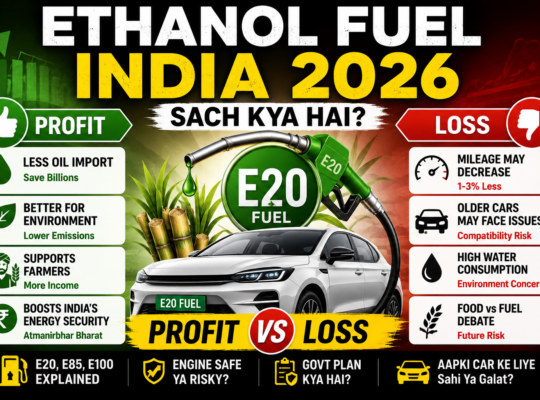
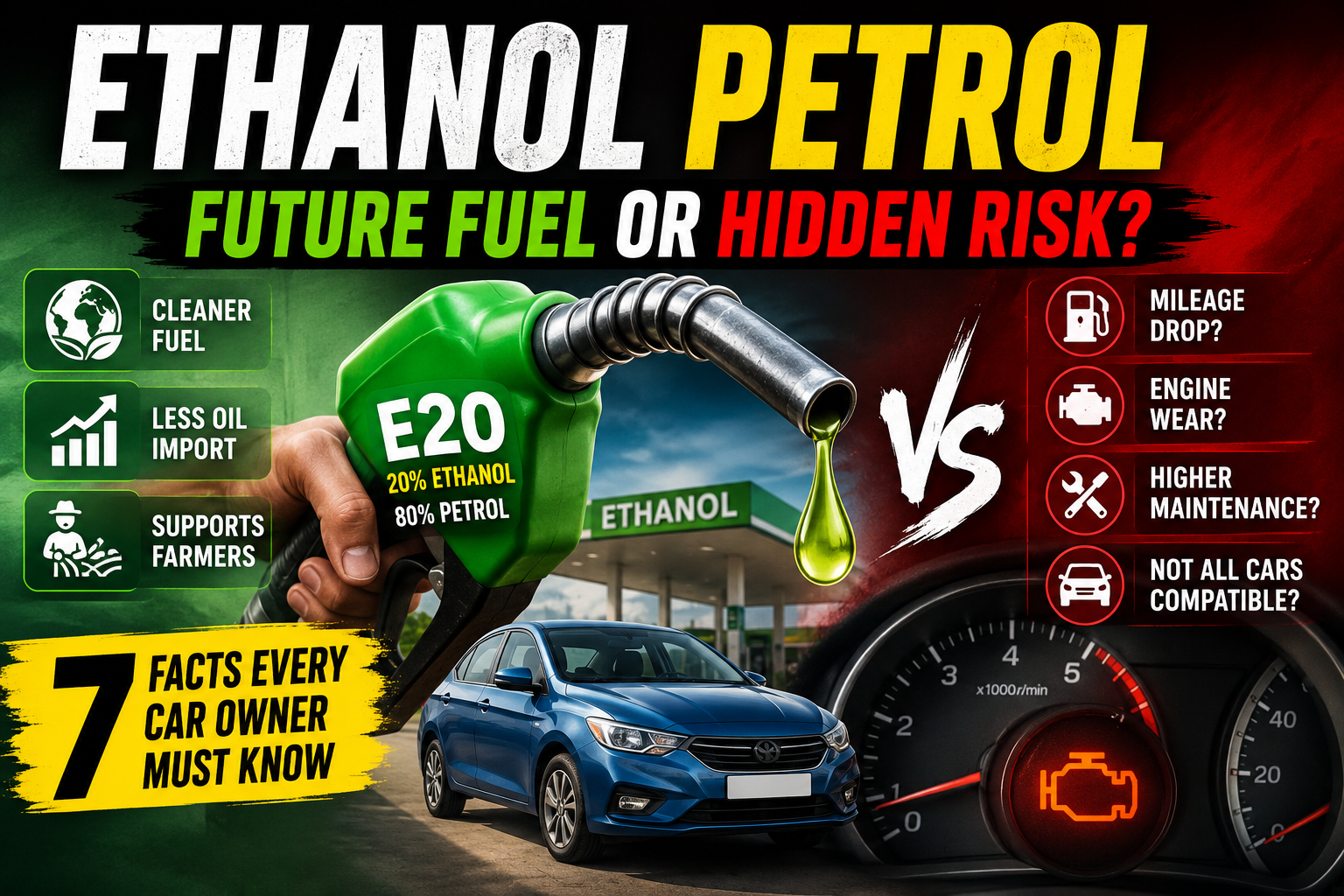
Simply put, Ethanol Petrol is regular petrol blended with ethanol, a renewable biofuel produced mainly from sugarcane, maize, and other agricultural feedstocks. In India, the most commonly discussed blend is E20, which contains up to 20% ethanol and 80% petrol.
The Government of India has been steadily increasing ethanol blending as part of its long-term energy strategy. The main objectives include:
- Reducing India’s dependence on imported crude oil.
- Lowering vehicle emissions.
- Supporting farmers by creating additional demand for agricultural produce.
- Improving the country’s energy security.
From a policy perspective, the idea appears promising. Every litre of ethanol blended into petrol can reduce fossil fuel consumption and help save foreign exchange spent on oil imports.
However, while these benefits sound attractive on paper, many vehicle owners have started asking practical questions.
Will fuel economy decrease?
Can older engines safely use higher ethanol blends?
Will maintenance costs increase over time?
These are the questions driving the current debate around Ethanol Petrol, and they deserve clear, evidence-based answers rather than assumptions.
In the next section, we’ll examine why Ethanol Petrol has become one of the biggest controversies in India’s automobile industry and what concerns are being raised by drivers, mechanics, and experts.
Why Is Ethanol Petrol Creating So Much Controversy?
If you have searched for Ethanol Petrol on YouTube, X (formerly Twitter), Facebook, or automotive forums, you’ve probably noticed one thing—opinions are sharply divided.
One group believes ethanol-blended fuel is a major step toward a cleaner and more self-reliant India. Another group fears it could affect engine life, reduce mileage, and increase maintenance costs, especially in older vehicles.
So, why has this debate become so intense?
Concern 1: Will Mileage Go Down?
This is perhaps the most common concern among Indian car owners.
Ethanol contains less energy per litre than pure petrol. Because of this, some drivers may notice a slight drop in fuel economy when using higher ethanol blends. However, the actual difference depends on several factors, including:
- Vehicle model
- Engine tuning
- Driving style
- Traffic conditions
- Whether the engine is designed for ethanol-blended fuel
In vehicles specifically engineered for E20 compatibility, manufacturers calibrate the engine to manage these differences more effectively.
Concern 2: Is Every Car Compatible?
The simple answer is No.
Not every petrol vehicle on Indian roads was originally designed for higher ethanol blends.
Many newer cars and motorcycles sold in recent years have been updated or certified for E20 compatibility, but older models may have fuel system components that were not designed with higher ethanol content in mind.
That’s why experts recommend checking your vehicle owner’s manual or confirming compatibility with the manufacturer before making assumptions.
Concern 3: What About Engine Durability?
This is where most of the confusion begins.
You’ll often find claims online saying:
- “Ethanol Petrol destroys engines.”
- “Never fill ethanol fuel.”
- “Your engine will fail within months.”
These statements are usually overgeneralisations.
There is no official evidence that approved ethanol-blended fuel automatically damages every engine. At the same time, manufacturers also acknowledge that vehicles not designed for higher ethanol blends should always follow the fuel specifications mentioned in the owner’s manual.
In short, compatibility matters more than rumours.
Concern 4: Maintenance Costs
Some mechanics and vehicle owners believe long-term use of higher ethanol blends could increase maintenance expenses in vehicles that are not ethanol-compatible.
Their concerns generally focus on:
- Rubber hoses and seals
- Fuel lines
- Fuel pumps
- Fuel injectors
However, this does not mean every vehicle will experience these issues. The outcome depends on the vehicle’s design, age, maintenance history, and manufacturer recommendations.
Why Is There So Much Confusion?
A major reason behind the Ethanol Petrol debate is the huge amount of unverified information circulating online.
Short videos, viral posts, and forwarded messages often make dramatic claims without citing official studies or manufacturer guidance. On the other hand, government agencies and automakers continue to promote ethanol blending as part of India’s long-term energy strategy.
As a result, many car owners are left wondering whom they should trust.
That’s exactly why it is important to look beyond social media and rely on verified information before forming an opinion.
In the next section, we’ll look at what the Government of India, automobile manufacturers, and industry experts officially say about Ethanol Petrol, and how their views compare with public concerns.
What Does the Government Say About Ethanol Petrol?
While the public debate continues, the Government of India has remained clear about one thing—Ethanol Petrol is a key part of the country’s long-term energy strategy.
According to the government, increasing ethanol blending is not just about changing the fuel available at petrol pumps. It is part of a broader plan to improve India’s energy security, reduce dependence on imported crude oil, and support the agricultural sector.
The key objectives behind promoting Ethanol Petrol include:
- Reducing crude oil imports and saving foreign exchange.
- Lowering tailpipe emissions from petrol-powered vehicles.
- Creating additional income opportunities for farmers through ethanol production.
- Promoting cleaner and more sustainable mobility.
This is why India has accelerated its ethanol blending programme over the past few years.
What Do Automobile Manufacturers Say?
Automobile manufacturers have taken a more practical approach.
Instead of asking every customer to immediately switch to higher ethanol blends, most companies advise owners to follow the fuel specification mentioned in the vehicle’s owner’s manual.
In recent years, many manufacturers have started introducing E20-compatible petrol vehicles, meaning these models are engineered and tested to safely operate with higher ethanol blends.
However, this does not automatically mean that every older petrol vehicle on Indian roads is suitable for the same fuel.
For vehicle owners, the safest approach is simple:
- Check your owner’s manual.
- Verify fuel compatibility with the manufacturer or authorised dealership.
- Follow the recommended fuel specifications.
Ignoring these recommendations can create unnecessary confusion and may even affect warranty conditions in some cases.
Myth vs Fact: Ethanol Petrol
The internet is filled with claims about Ethanol Petrol, but not all of them are accurate. Here are some of the most common myths.
Myth: Ethanol Petrol will damage every engine.
Fact: There is no official evidence that approved ethanol-blended fuel damages every petrol engine. Compatibility depends on how the vehicle has been designed and what fuel the manufacturer recommends.
Myth: Every petrol car can safely use any ethanol blend.
Fact: Fuel compatibility varies from one model to another. Owners should always check the manufacturer’s recommendations before using higher ethanol blends.
Myth: Ethanol Petrol always causes a huge drop in mileage.
Fact: Because ethanol contains less energy than petrol, some reduction in fuel economy may occur. However, the actual difference depends on the vehicle, engine calibration, and driving conditions.
Myth: Ethanol Petrol has no benefits.
Fact: Ethanol blending is intended to reduce fossil fuel consumption, lower crude oil imports, and support renewable fuel adoption. These are the primary reasons governments around the world continue investing in ethanol-based fuel programmes.
So, Should You Be Worried?
If your vehicle is officially compatible with Ethanol Petrol, there is generally no reason to panic simply because of online rumours.
On the other hand, if you own an older petrol vehicle and are unsure about compatibility, the best approach is to confirm the recommended fuel type before making any changes.
The biggest mistake any car owner can make is relying entirely on social media opinions instead of verified information.
Every vehicle is different, and what works for one model may not apply to another.
Gaadi Xpert Verdict
The debate around Ethanol Petrol is likely to continue, and both supporters and critics have valid questions. The government sees ethanol blending as an important step towards reducing fuel imports and promoting cleaner mobility, while many car owners remain concerned about mileage, compatibility, and long-term maintenance.
At Gaadi Xpert, our advice is simple: don’t let fear or hype decide for you. Check your vehicle’s official fuel recommendation, understand whether it is ethanol-compatible, and rely on trusted information rather than viral claims.
As more E20-ready vehicles enter the market and manufacturers release updated guidance, the picture will become clearer. Until then, informed decisions—not rumours—are the best way to protect both your car and your wallet.
Frequently Asked Questions (FAQs)
1. What is Ethanol Petrol?
Ethanol Petrol is regular petrol blended with ethanol, a renewable biofuel made from agricultural feedstocks such as sugarcane and maize. In India, the most common blend is E20, which contains up to 20% ethanol and 80% petrol.
2. Is Ethanol Petrol safe for every car?
No. Not every petrol vehicle is designed for higher ethanol blends. Many newer models are E20-compatible, while some older vehicles may require different fuel specifications. Always check your owner’s manual or contact your vehicle manufacturer before using ethanol-blended fuel.
3. Does Ethanol Petrol reduce mileage?
Ethanol contains slightly less energy than pure petrol, so some vehicles may experience a small reduction in fuel economy. However, the actual impact depends on the vehicle, engine tuning, and driving conditions.
4. Can I use Ethanol Petrol in an older car?
It depends on your vehicle’s fuel compatibility. If your manufacturer has not approved higher ethanol blends for your model, you should continue using the recommended fuel specified in the owner’s manual.
5. Will Ethanol Petrol damage my engine?
There is no official evidence that approved ethanol-blended fuel automatically damages every engine. The key factor is whether your vehicle has been designed and certified for the recommended ethanol blend.
6. Why is the Government promoting Ethanol Petrol?
The Government of India is encouraging ethanol blending to reduce crude oil imports, improve energy security, lower emissions, and create additional income opportunities for farmers by increasing demand for ethanol feedstocks.
7. Should you be worried about Ethanol Petrol?
If your vehicle is officially compatible with the recommended ethanol blend, there is generally no need to worry. If you’re unsure, check your owner’s manual or consult an authorised service centre before making any changes.
Final Thoughts
The debate around Ethanol Petrol is unlikely to end anytime soon. Some drivers see it as an important step towards cleaner mobility and reduced dependence on imported oil, while others remain cautious about compatibility, mileage, and long-term ownership costs.
The most practical approach is to avoid relying on rumours or viral social media posts. Instead, follow your vehicle manufacturer’s recommendations, understand your car’s fuel compatibility, and make informed decisions based on verified information.
As India continues its transition towards cleaner fuels, staying informed will help you protect your vehicle and make better choices at the fuel station.
Also Read About Ethanol Petrol Part 2
Source : Ministry of Petroleum & Natural Gas