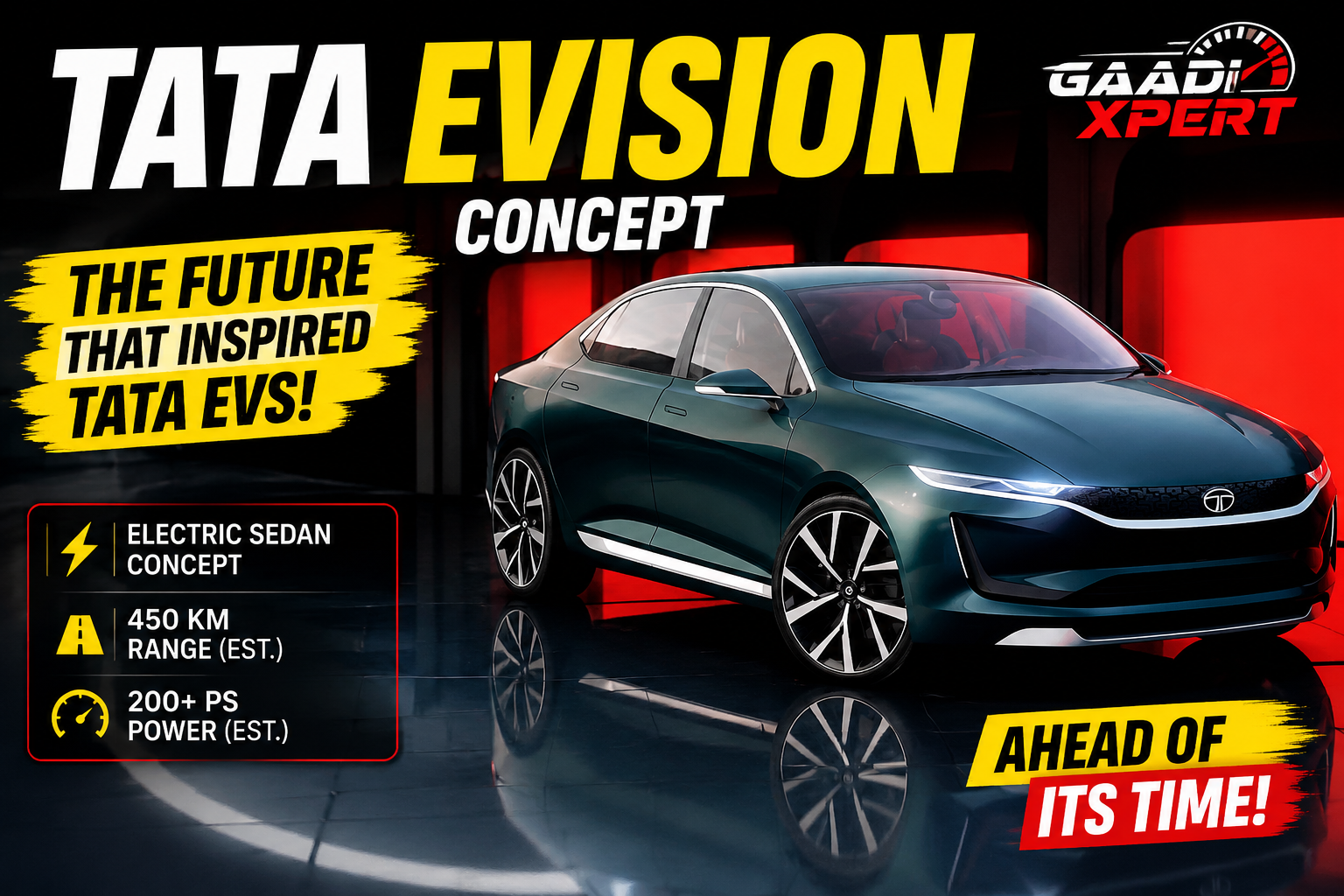
TATA EVision : Electric vehicles are transforming the global automotive industry, and concept cars often provide the first glimpse of what the future may look like. Among the most impressive concepts introduced by Tata Motors, Tata EVision stands out as a bold statement of innovation, premium design, and sustainable mobility. Unveiled at the 2018 Geneva International Motor Show, this futuristic electric sedan showcased how the Indian automaker envisioned the next generation of electric vehicles.
Although the concept never reached production, it remains one of the most talked-about projects from Tata Motors. It introduced a sophisticated design language, an advanced electric architecture, and several premium technologies that later influenced the company’s approach to modern passenger vehicles. Even today, automotive enthusiasts continue to search for information about this concept because it represents an important milestone in Tata Motors’ electric journey.
Rather than being developed as an immediate production model, the vehicle was created to demonstrate the company’s engineering capabilities and future design philosophy. It also reflected Tata Motors’ ambition to compete with established global manufacturers in the premium electric vehicle segment.
What is Tata EVision?
The Tata EVision is a premium electric sedan concept designed to showcase Tata Motors’ vision for future electric mobility. Unlike a traditional concept built only for display, this project combined futuristic styling with practical engineering ideas that could eventually influence production vehicles.
Built on the Advanced Modular Platform (AMP), the concept highlighted the flexibility of Tata Motors’ next-generation vehicle architecture. The platform was designed to support different body styles while accommodating an electric powertrain beneath the cabin floor.
At the time of its unveiling, the concept received widespread attention because it blended luxury, technology, and sustainability into one elegant package. While Tata Motors never confirmed mass production, several styling elements introduced through the concept later appeared across newer passenger vehicles and electric concepts.
The sedan also demonstrated how the company planned to improve space utilization, ride quality, and driving dynamics by developing dedicated electric vehicle platforms rather than adapting conventional combustion-engine architectures.
Tata EVision Exterior Design
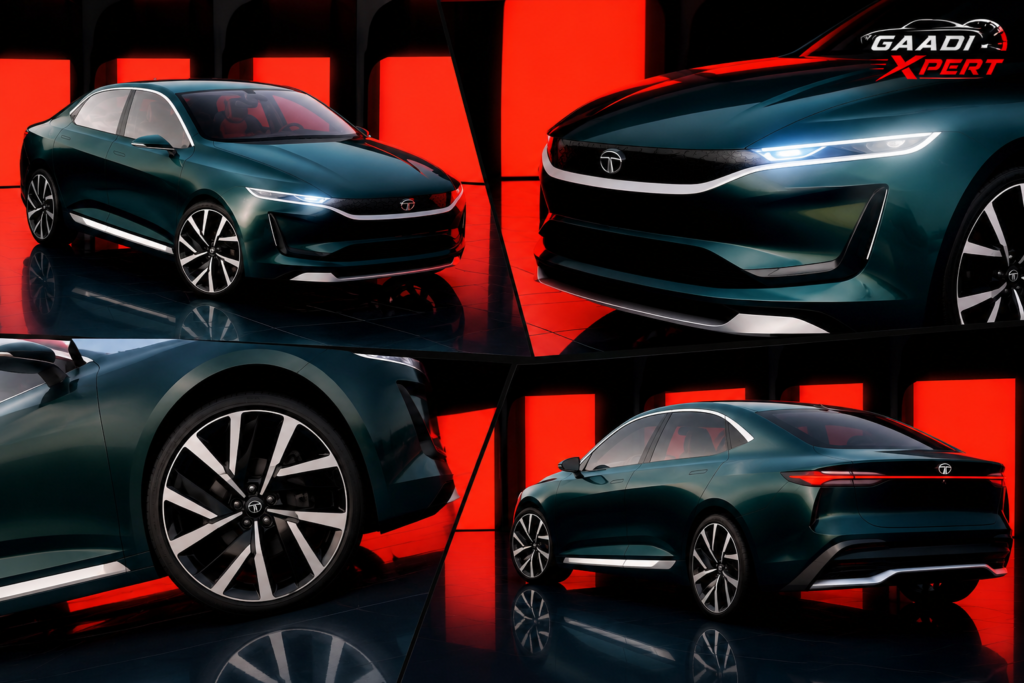
The exterior design immediately attracts attention through its clean proportions and premium appearance. Instead of using aggressive styling, the designers focused on elegance, aerodynamics, and simplicity.
The front fascia features a closed grille that reflects the characteristics of a modern electric vehicle. Slim LED headlamps, sculpted daytime running lights, and a sporty bumper create a futuristic identity while maintaining a sophisticated look.
From the side profile, the concept displays a coupe-inspired roofline that flows smoothly toward the rear. Strong shoulder lines, large alloy wheels, and flush body surfaces improve the aerodynamic profile while giving the sedan a premium road presence.
The rear section continues the minimalist theme with connected LED taillights, a sculpted boot lid, and a clean bumper design. Every detail contributes to a balanced appearance without unnecessary visual clutter.
Large glass areas enhance visibility while creating an airy feeling inside the cabin. The long wheelbase also improves overall proportions, making the sedan appear larger and more luxurious than conventional mid-size cars.
Tata EVision Interior and Cabin Experience
The cabin reflects a modern interpretation of luxury where technology and comfort work together seamlessly.
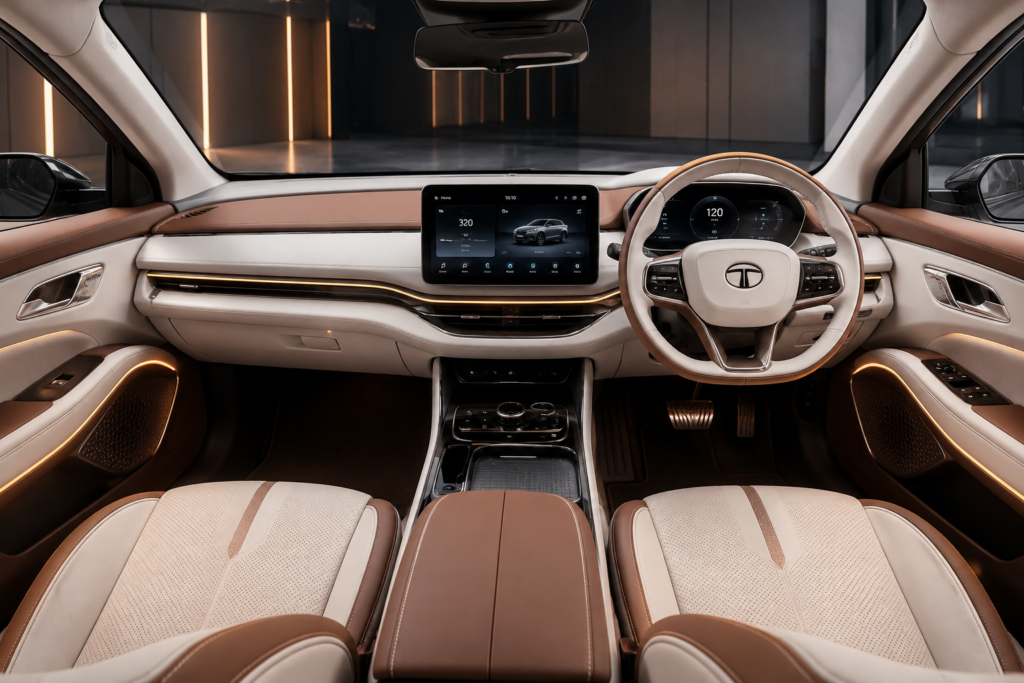
Instead of relying on numerous physical buttons, the dashboard adopts a clean horizontal layout with integrated digital displays. A large infotainment system dominates the center console, while a fully digital instrument cluster provides essential driving information directly in front of the driver.
Premium leather upholstery, soft-touch dashboard materials, brushed metallic accents, and ambient lighting create an upscale environment suitable for executive buyers.
The spacious cabin benefits from the dedicated electric platform, allowing engineers to maximize passenger room without increasing the vehicle’s external dimensions.
Rear passengers receive generous legroom thanks to the flat floor design, while the wide seats are expected to provide excellent comfort during long journeys.
Storage areas have also been intelligently integrated throughout the cabin, making the sedan practical for everyday family use despite its futuristic design philosophy.
Specifications Of TATA EVision : –
| Specification | Expected Details |
|---|---|
| Vehicle Type | Premium Electric Sedan Concept |
| Platform | Advanced Modular Platform (AMP) |
| Battery Pack | Expected 60–70 kWh Lithium-Ion Battery |
| Driving Range | Up to 450 km (Estimated) |
| Power Output | Around 200–250 PS (Expected) |
| Torque | Approximately 350–400 Nm (Estimated) |
| Drivetrain | Dual-Motor AWD (Concept Estimate) |
| 0–100 km/h | Under 8 Seconds (Expected) |
| Top Speed | Around 180–200 km/h |
| Charging | AC & DC Fast Charging (Expected) |
| Seating Capacity | 5 Passengers |
| Lighting | Full LED Lighting System |
Tata Motors never released final production specifications because the vehicle remained a concept.
Expected Battery, Range and Performance of Tata EVision
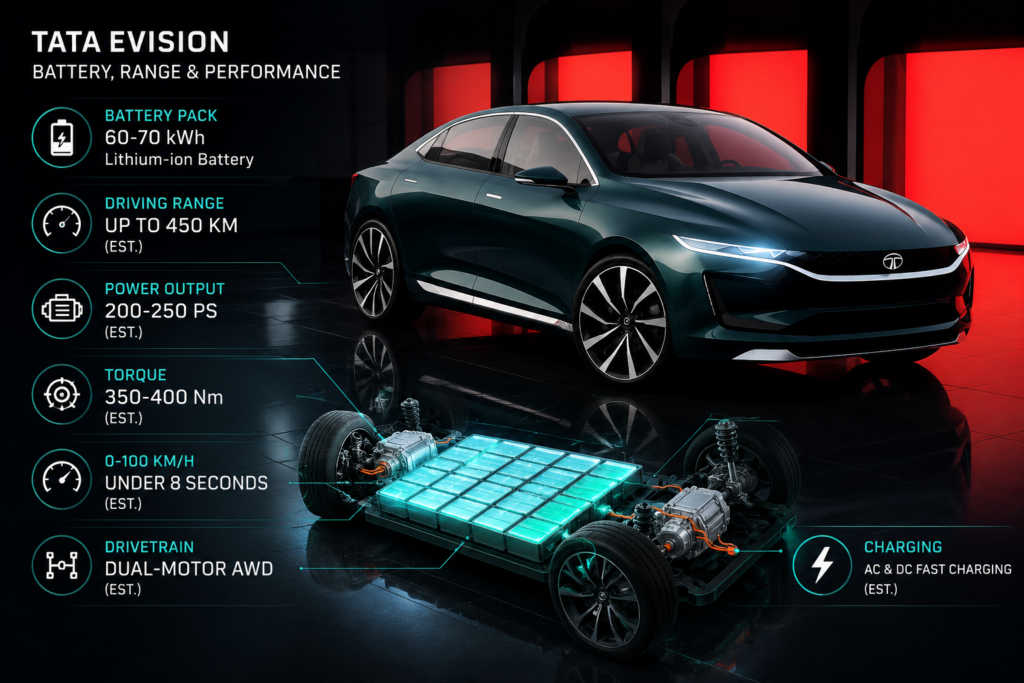
One of the most exciting aspects of the Tata EVision was its potential electric performance. Although Tata Motors did not officially disclose battery specifications, automotive experts estimated that the concept could accommodate a battery pack between 60 and 70 kWh.
With such a battery, the sedan was expected to deliver an estimated driving range of approximately 450 kilometres on a single charge under ideal conditions. This would have placed the vehicle among competitive premium electric sedans during its time.
Industry observers also believed the electric powertrain could generate between 200 and 250 PS along with approximately 350 to 400 Nm of instant torque. Such figures would provide quick acceleration, smooth highway cruising, and effortless overtaking.
A dual-motor all-wheel-drive configuration was widely expected because the platform appeared capable of supporting multiple electric motors. This setup would improve traction, stability, and overall driving confidence, especially in varying road conditions.
Fast-charging capability was another anticipated feature. With support for modern DC charging infrastructure, the battery could potentially recover a significant percentage of charge within a relatively short period, making long-distance travel more practical.
Platform and Engineering
One of the strongest foundations behind the Tata EVision was the Advanced Modular Platform. This architecture was developed with flexibility in mind, allowing Tata Motors to build different body styles using a common engineering base.
The battery placement beneath the cabin floor would lower the center of gravity, improving cornering stability while also enhancing occupant safety. The platform was expected to offer better weight distribution, increased structural rigidity, and greater interior space compared to traditional vehicle architectures.
This engineering philosophy later became an important direction for Tata Motors as the company expanded its electric vehicle portfolio.
Technology and Premium Features of Tata EVision
As a futuristic concept, the vehicle was envisioned with technologies that could define the next generation of premium electric mobility. Instead of focusing only on performance, Tata Motors emphasized connectivity, intelligent interfaces, and a luxurious driving experience.
The cabin was expected to feature a large floating touchscreen infotainment system with smartphone integration, voice recognition, cloud-based connected services, navigation, and over-the-air software updates. A fully digital instrument cluster would provide real-time driving information, battery status, energy consumption, and navigation instructions through a clean and customizable interface.
Other premium features expected from the concept included wireless charging, multiple USB ports, a premium sound system, dual-zone climate control, ambient lighting, electrically adjustable front seats, keyless entry, push-button start, and a panoramic glass roof. Together, these features would have positioned the sedan among premium global electric vehicles rather than mainstream family cars.
The overall user experience was designed to be simple and intuitive. Instead of overwhelming the driver with physical buttons, most vehicle controls were integrated into digital displays, creating a modern cockpit that matched global design trends.
Expected Safety Package
Safety has always been an important focus for Tata Motors, and this concept was expected to continue that philosophy with advanced protection technologies.
Although official specifications were never released, automotive experts believed the sedan could include multiple airbags, Electronic Stability Control (ESC), Anti-lock Braking System (ABS), Electronic Brakeforce Distribution (EBD), traction control, hill-start assist, tyre pressure monitoring, and a 360-degree camera.
There was also speculation that future production versions inspired by this concept could introduce Advanced Driver Assistance Systems (ADAS), including adaptive cruise control, lane departure warning, autonomous emergency braking, blind-spot monitoring, and traffic sign recognition.
The rigid electric platform and low battery placement would also contribute to improved crash protection by strengthening the vehicle’s structure and maintaining a lower centre of gravity.
Why It Never Reached Production
One of the biggest questions surrounding the Tata EVision is why it never entered mass production.
The answer lies in the rapidly changing electric vehicle market. When the concept debuted in 2018, India’s EV infrastructure was still developing, battery costs remained high, and customer demand for premium electric sedans was relatively limited.
Instead of launching an expensive flagship sedan, Tata Motors shifted its attention toward practical electric SUVs and hatchbacks that appealed to a much larger customer base. This strategy eventually led to the success of models like the Nexon EV, Tiago EV, Punch EV, and Curvv EV.
Another reason was changing consumer preferences. Global buyers increasingly preferred SUVs over sedans, encouraging manufacturers to invest more heavily in electric crossovers instead of traditional four-door models.
As a result, the concept served as a technology demonstrator rather than a production-ready vehicle.
Influence on Future Tata Electric Vehicles
Although the Tata EVision never reached dealerships, its impact can still be seen across Tata Motors’ modern vehicle lineup.
Many of the styling cues introduced by the concept—including clean body surfaces, slim LED lighting signatures, premium interior themes, connected technology, and minimalist dashboard layouts—later appeared in several Tata passenger vehicles.
The concept also demonstrated the company’s confidence in electric mobility long before EVs became mainstream in India. Lessons learned from this project helped Tata Motors strengthen its design philosophy and engineering capabilities while preparing for a broader electric future.
Today, the brand has established itself as one of India’s leading electric vehicle manufacturers, and concepts like this played a significant role in shaping that journey.
{ { Also Read TATA Sierra EV Review }
Could Tata Bring Back This Electric Sedan?
The possibility cannot be completely ruled out.
With India’s premium EV market growing steadily and charging infrastructure improving every year, there is increasing demand for executive electric sedans. If Tata Motors decides to expand beyond electric SUVs, it could revisit several ideas introduced by the Tata EVision and transform them into a modern production vehicle.
Future battery technology, lower manufacturing costs, and stronger consumer demand may create the right conditions for such a project. However, as of now, the company has not announced any official plans to revive the concept.
Final Verdict
Even though it never entered production, the project remains one of the most important milestones in Tata Motors’ electric vehicle journey. It successfully demonstrated how the company intended to combine premium design, advanced technology, sustainable mobility, and intelligent engineering into one futuristic package.
From its elegant exterior and luxurious cabin to its flexible electric platform and ambitious performance expectations, the concept showcased the direction in which Tata Motors wanted to move. While today’s production EVs have taken a different path focused on affordability and practicality, many ideas first seen in Tata EVision continue to influence the brand’s evolving design language.
For automotive enthusiasts, the concept is more than just an unbuilt sedan. It represents a bold vision of innovation that arrived years before India’s electric vehicle revolution truly began. Although it remains a concept, its legacy continues to inspire discussions about what the future of premium electric mobility from Tata Motors could look like.
Frequently Asked Questions
1. Is this concept available for purchase?
No. It was unveiled as a concept vehicle and has never entered commercial production.
2. Was an official launch date ever announced?
No. Tata Motors did not confirm any production timeline or launch schedule.
3. What was the estimated driving range?
Industry estimates suggested that the concept could deliver around 450 km on a full charge, although this was never officially confirmed.
4. Why did Tata Motors not manufacture it?
The company shifted its focus toward affordable electric SUVs and hatchbacks, where customer demand was significantly higher.
5. Could Tata Motors develop a premium electric sedan in the future?
Yes. As the premium EV market continues to grow, the company could introduce a new electric sedan inspired by concepts showcased in the past, though no official announcement has been made.