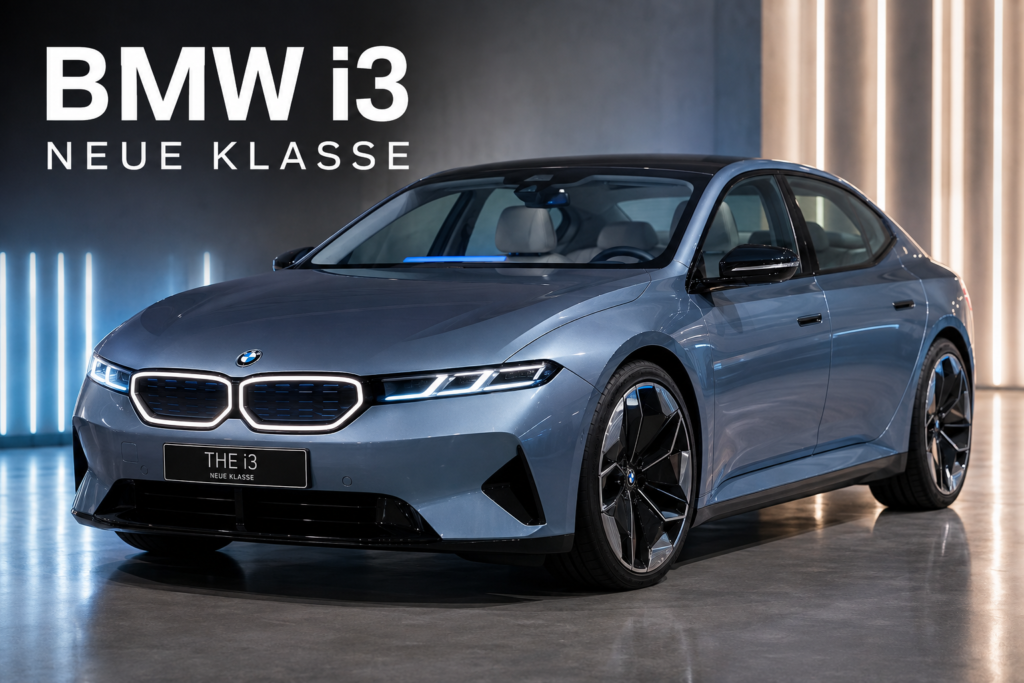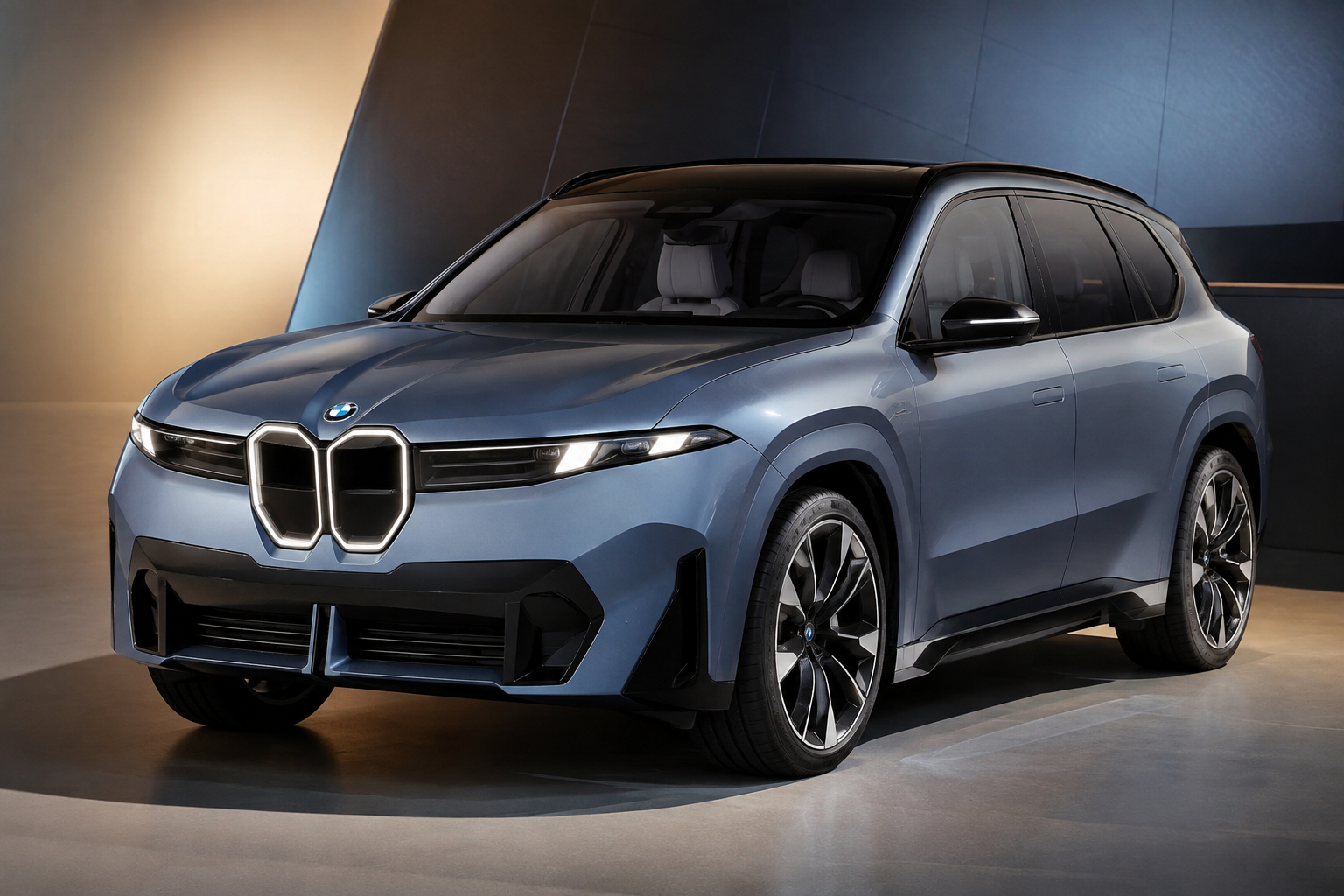
The BMW iX3 2026 marks a major turning point for BMW’s electric vehicle strategy. Unlike a conventional model update, this new-generation electric Sports Activity Vehicle (SAV) introduces BMW’s Neue Klasse architecture, a completely new design direction, sixth-generation BMW eDrive technology and a much more advanced digital experience.
The new BMW iX3 was globally presented in 2025 as the first series-production model based on BMW’s Neue Klasse, making it one of the most important new vehicles in the company’s modern history. BMW has developed the SUV around three major priorities: improved electric efficiency, faster charging and a more intelligent vehicle operating system.
The headline numbers are impressive. The BMW iX3 50 xDrive offers a WLTP electric range of up to 805 km, while its maximum DC charging capability reaches 400 kW. BMW says the vehicle can add up to 372 km of WLTP range in around 10 minutes under suitable charging conditions.
The new iX3 is also much more than an electric version of the previous-generation X3. BMW has used it to introduce its new BMW Panoramic iDrive, a new electronic architecture built around four high-performance computing units and the Heart of Joy control unit. These technologies are expected to form the foundation for many future BMW models.
The European market launch of the new BMW iX3 began in spring 2026, making it an already-launched global-market model rather than a future concept or upcoming prototype.
In this detailed Gaadi Xpert review, we will look at the BMW iX3 2026 from a global perspective, covering its variants, pricing, colours, design, interior, technology, battery, performance, range, charging, safety and ownership proposition.
BMW iX3 2026 Price & Variants
The global pricing of the BMW iX3 varies significantly depending on the country, taxes, specifications and equipment packages. Therefore, there is no single worldwide price for the model.
The first major production version introduced by BMW is the BMW iX3 50 xDrive. BMW has also expanded the range with additional versions for different markets, including an entry-level variant.
BMW iX3 2026 Global Variant Overview
| Variant | Powertrain | Drive | WLTP Range |
|---|---|---|---|
| BMW iX3 50 xDrive | Dual electric motors | AWD | Up to 805 km |
| BMW iX3 40 | Electric | Market-dependent | Up to 637 km* |
*Range depends on market specification, wheels, tyres and equipment.
The iX3 50 xDrive is currently the flagship version of the mainstream global lineup. It uses electric motors on both axles and produces a combined output of 345 kW, equivalent to approximately 469 hp. BMW quotes a WLTP range of 673–805 km on its German market configurator, depending on specification.
The entry-level versions are intended to make the Neue Klasse technology available across a broader section of the premium electric SUV market. BMW has confirmed that additional fully electric variants would follow the initial iX3 50 xDrive.
US Market Price
For the US market, BMW has announced a starting MSRP of $61,500 for the 2027 BMW iX3 50 xDrive, before the destination and handling charge of $1,350. This figure is specific to the US market and should not be treated as a global price.
This positioning places the iX3 directly into the premium electric SUV segment, where it competes with other high-end electric crossovers offering long driving ranges and advanced charging technology.
BMW iX3 2026 Colours
BMW has given the new BMW iX3 a fresh colour palette that matches its completely redesigned exterior.
The current German BMW configurator lists several exterior paint choices for the iX3 50 xDrive, including:
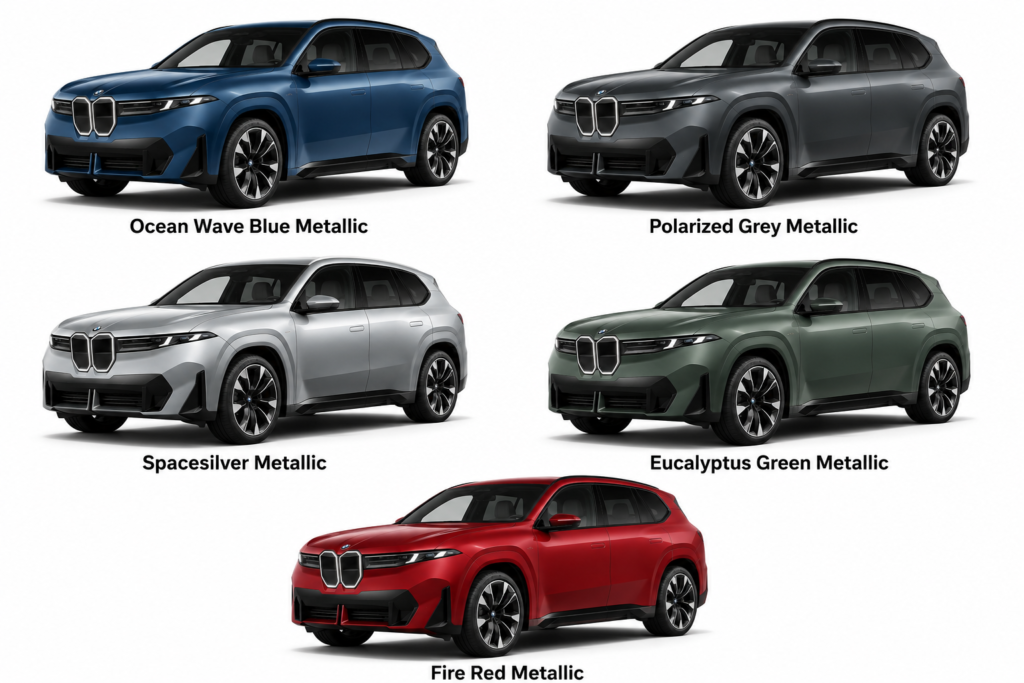
- Ocean Wave Blue Metallic
- Polarized Grey Metallic
- Spacesilver Metallic
- Eucalyptus Green Metallic
- Fire Red Metallic
Among these, Ocean Wave Blue Metallic gives the bmw iX3 a particularly modern electric-SUV appearance, while Polarized Grey Metallic creates a more understated premium look. Fire Red Metallic gives the new design a much sportier visual character.
Colour availability can vary between countries and equipment configurations, so buyers in different global markets may see a different final palette.
BMW iX3 2026: What Makes It Different?
The biggest story behind the new BMW iX3 is not simply its electric powertrain. It is the fact that BMW is using this SUV as the starting point for its Neue Klasse era.
The vehicle introduces a new generation of BMW technology covering:
- Sixth-generation BMW eDrive
- 800V electrical architecture
- Up to 400 kW DC charging
- New battery technology
- BMW Panoramic iDrive
- Four high-performance computing units
- Heart of Joy drivetrain control
- Advanced driver-assistance technology
- New BMW design language
BMW says the new vehicle also delivers a significantly lower lifecycle carbon footprint compared with its predecessor, with the company targeting a reduction of more than 30% over the vehicle’s lifecycle.
This makes the BMW iX3 2026 an important model not only for BMW’s electric SUV range but for the company’s wider transition toward software-defined and highly connected vehicles.
Exterior Design
The BMW iX3 2026 introduces an entirely new design philosophy for BMW’s electric SUV range. Based on the Neue Klasse platform, the new iX3 moves away from the styling of the previous-generation model and adopts a cleaner, more modern and more aerodynamic appearance.
BMW describes the new design language as a combination of clarity, spaciousness and characteristic BMW proportions. The result is an SUV that looks more minimalist than the outgoing iX3 while still retaining recognizable BMW elements.
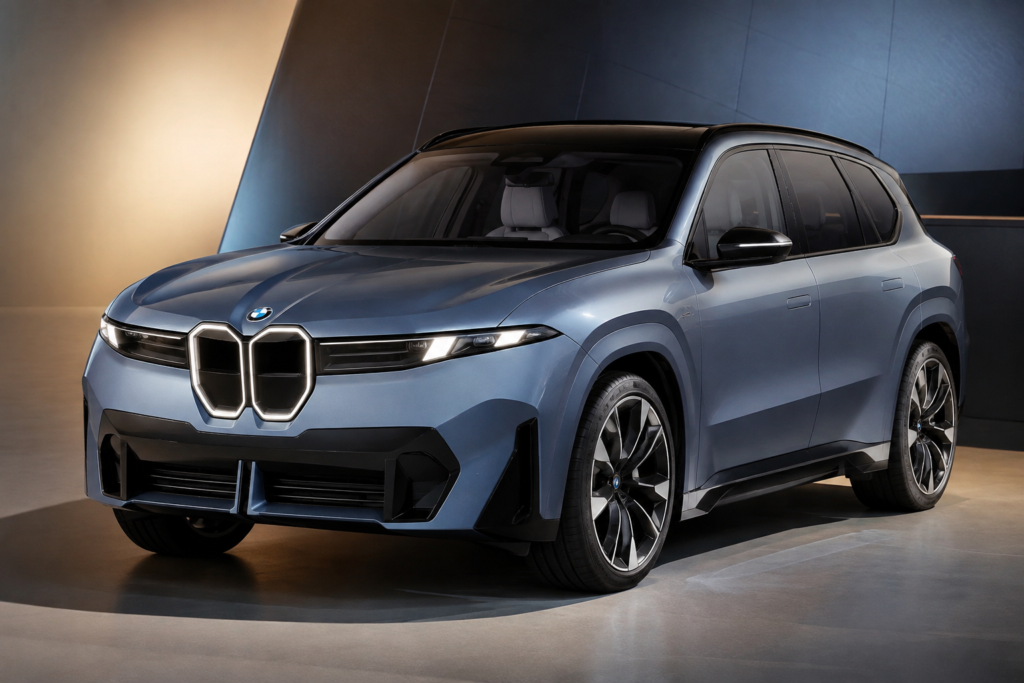
New BMW Face
One of the most noticeable changes is the front-end design.
The new iX3 gets a much cleaner interpretation of BMW’s traditional kidney grille. Instead of using a conventional grille for engine cooling, the electric SUV uses the front area primarily as a design and technology element.
The front fascia integrates BMW’s new illuminated grille treatment with slim lighting elements. The headlights are positioned closely around the central design area, giving the iX3 a distinctive appearance.
BMW’s new design approach also reduces unnecessary visual lines. The result is a smoother front section that contributes to the vehicle’s aerodynamic efficiency.
Panoramic Front Lighting
The lighting design is another major part of the new iX3’s identity.
The front lighting signature is slimmer and more integrated into the bodywork. BMW uses modern LED technology to create a distinctive daytime appearance, while higher equipment levels can offer advanced lighting functions.
The rear also receives a new interpretation of BMW’s traditional L-shaped lighting signature.
Aerodynamics
Aerodynamics played a major role in the development of the new BMW iX3.
BMW has worked extensively on airflow around the vehicle, including the front section, underbody, wheels and rear design.
The new model achieves a drag coefficient as low as 0.24, depending on specification. This is particularly important for an electric vehicle because reducing aerodynamic resistance helps improve efficiency and therefore driving range.
The vehicle also uses aerodynamic wheels and other airflow-management elements to further reduce energy consumption.
Side Profile
From the side, the BMW iX3 retains the familiar proportions of a premium BMW SUV but looks significantly more streamlined.
The roofline gradually slopes toward the rear without turning the vehicle into a full coupe-SUV. This allows BMW to maintain useful interior space while still achieving a sporty appearance.
The flush door handles and clean body surfaces further contribute to the modern appearance.
The new iX3 also uses a more sculpted shoulder line and a visually cleaner side section compared with the previous generation.
Rear Design
At the rear, the iX3 continues the minimalist design philosophy.
The LED taillights are slim and horizontally oriented, giving the vehicle a wider visual stance.
The lower rear bumper avoids unnecessary styling elements because the vehicle does not require traditional exhaust outlets.
The result is a clean electric-SUV rear design that emphasizes width and technology rather than aggressive detailing.
BMW iX3 2026 Interior & Cabin
The biggest technological transformation takes place inside the cabin.
The new BMW iX3 2026 introduces the company’s next-generation Panoramic iDrive interface, which changes how the driver interacts with information, navigation and vehicle functions.
BMW has moved toward a much cleaner dashboard design with fewer conventional controls.
Instead of surrounding the driver with multiple screens, BMW combines several information layers into a single digital environment.
BMW Panoramic iDrive
The BMW Panoramic iDrive is one of the most important features introduced with the new iX3.
A key component is BMW Panoramic Vision, a display system that projects important information across the lower section of the windscreen area, allowing the driver to see information without having to look down toward the conventional instrument cluster.
BMW’s new system also includes a central touchscreen and an optional 3D Head-Up Display.
The idea is to provide important information within the driver’s natural field of vision while reducing unnecessary visual distraction.
Central Display
The central touchscreen acts as the main control interface for the vehicle’s infotainment system.
It handles functions such as:
- Navigation
- Media
- Vehicle settings
- Charging information
- Climate-related functions
- Connectivity
- Applications
- Driver-assistance controls
The system is designed around BMW’s next-generation operating architecture and supports more natural interaction between the driver and vehicle.
Steering Wheel
The steering wheel has also been redesigned.
BMW has retained physical controls for important driving functions while simplifying the overall layout.
The steering wheel works together with the Panoramic Vision display and central screen, creating a more integrated digital cockpit.
Cabin Space
The Neue Klasse architecture also allows BMW to optimize the interior packaging.
The iX3 provides a spacious five-seat cabin with a flat-floor electric-vehicle layout.
The absence of a conventional combustion engine and transmission arrangement gives BMW greater freedom to package the cabin and storage areas.
The rear seats provide useful space for passengers, while the large glass areas help create a more open feeling inside the cabin.
BMW iX3 2026 Features & Technology
Technology is arguably the strongest part of the new iX3.
BMW has developed the vehicle around a new electronic architecture featuring four high-performance computers, which BMW calls Superbrains.
These systems handle different vehicle functions including infotainment, driving assistance, vehicle dynamics and other software-intensive operations.
Heart of Joy
Another major innovation is BMW’s Heart of Joy control unit.
It is responsible for coordinating important drivetrain and driving-dynamics functions.
BMW says the system processes information significantly faster than previous architectures and allows the vehicle to respond more precisely to driver inputs.
The Heart of Joy works together with BMW’s new electric drivetrain and chassis systems to improve:
- Acceleration response
- Regenerative braking
- Stability
- Steering response
- Driving smoothness
- Energy efficiency
This technology is especially important because BMW wants its next-generation EVs to retain the company’s traditional focus on driving dynamics.
BMW Operating System X
The new iX3 introduces BMW Operating System X, the next-generation software environment for BMW vehicles.
The system provides a more personalized digital experience and supports regular software improvements.
The architecture also allows BMW to add new functions through software updates rather than relying entirely on hardware changes.
Intelligent Personal Assistant
The BMW Intelligent Personal Assistant is integrated into the new digital ecosystem.
Drivers can use natural voice commands to interact with several vehicle functions.
The assistant can help with tasks such as navigation, vehicle settings and other connected functions.
BMW has also designed the system to work more naturally with the vehicle’s digital displays.
Smartphone Connectivity
The new iX3 supports modern smartphone integration and connected services.
Depending on market and equipment specification, users can access smartphone-based functions, digital services and remote vehicle functions through BMW’s connected ecosystem.
Advanced Driver Assistance
The new iX3 also receives a comprehensive collection of driver-assistance technologies.
Available systems can assist with:
- Adaptive cruise control
- Lane keeping
- Lane changing
- Collision warning
- Automatic emergency braking
- Parking assistance
- Surround-view monitoring
- Traffic-sign recognition
- Highway driving assistance
Exact functions and availability vary according to market and selected equipment.
Digital Key
BMW’s digital key technology allows compatible smartphones and devices to be used as a vehicle key.
This can reduce the need to carry a traditional physical key and can also allow digital access to be shared with other authorized users.
Sustainability
BMW has also focused on sustainability during the development of the new iX3.
The Neue Klasse architecture uses more recycled and resource-efficient materials, while BMW has worked to reduce the vehicle’s overall lifecycle carbon footprint.
The company says the new iX3 achieves a significant reduction in lifecycle CO₂ emissions compared with the previous generation.
BMW iX3 2026 Technology Highlights
| Feature | BMW iX3 2026 |
|---|---|
| Platform | Neue Klasse |
| Digital Interface | BMW Panoramic iDrive |
| Panoramic Display | BMW Panoramic Vision |
| Head-Up Display | Available |
| Operating System | BMW Operating System X |
| Vehicle Computers | 4 Superbrains |
| Drivetrain Controller | Heart of Joy |
| Voice Assistant | BMW Intelligent Personal Assistant |
| Connectivity | Advanced connected services |
| Driver Assistance | Multiple ADAS functions |
| Digital Key | Available |
| Charging Architecture | 800V |
The new BMW iX3 therefore combines a completely redesigned cabin with a much more software-focused vehicle architecture. The interior is not simply a larger-screen version of the previous BMW cabin; it represents the company’s new approach to how drivers interact with an electric vehicle.
BMW iX3 2026 Battery & Electric Powertrain
The BMW iX3 2026 is built around BMW’s sixth-generation BMW eDrive technology, developed specifically for the Neue Klasse platform.
The new electric architecture focuses on improving three key areas: energy density, charging speed and overall efficiency.
The flagship BMW iX3 50 xDrive uses a dual-motor setup with electric motors powering both axles. This gives the SUV all-wheel-drive capability while also providing the performance expected from a premium BMW.
The combined system output is 345 kW, equivalent to approximately 469 hp.
BMW has also developed a new high-voltage battery system for the Neue Klasse platform. The battery uses cylindrical cells rather than the prismatic cells used in several previous BMW electric models.
According to BMW, the new battery technology provides a significant improvement in energy density while also reducing losses within the electrical system.
BMW iX3 50 xDrive Technical Figures
| Specification | BMW iX3 50 xDrive |
|---|---|
| Power | 345 kW |
| Approx. Power | 469 hp |
| Drive | xDrive AWD |
| Battery Technology | Sixth-generation BMW eDrive |
| Electrical Architecture | 800V |
| Maximum DC Charging | 400 kW |
| Maximum WLTP Range | Up to 805 km |
| 0–100 km/h | 4.9 seconds |
| Top Speed | 210 km/h |
The exact range and efficiency figures can vary depending on wheel size, tyres, equipment, temperature, driving style and market-specific configuration.
BMW iX3 2026 Performance
Performance remains an important part of the new iX3.
The BMW iX3 50 xDrive can accelerate from 0 to 100 km/h in 4.9 seconds, making it considerably quicker than what many buyers would expect from a practical electric SUV.
The instant torque delivery of the electric motors provides rapid acceleration without the gear-shifting interruptions found in a conventional combustion-engine vehicle.
The dual-motor xDrive system can distribute torque between the front and rear axles depending on driving conditions.
This allows the iX3 to combine strong straight-line acceleration with improved traction.
Top Speed
The BMW iX3 50 xDrive has an electronically limited top speed of 210 km/h.
Although outright top speed is not the primary focus of an electric SUV, the figure demonstrates that BMW has not sacrificed high-speed capability in the move toward electrification.
BMW iX3 2026 Driving Range
One of the biggest strengths of the new BMW iX3 is its long driving range.
The flagship iX3 50 xDrive can achieve a maximum WLTP range of up to 805 km, depending on configuration.
This makes the new iX3 one of the longest-range premium electric SUVs in its segment.
BMW’s focus on efficiency is a major reason behind this result.
The company has improved the vehicle’s:
- Battery technology
- Electric motors
- Power electronics
- Aerodynamics
- Thermal management
- Software
- Regenerative braking
All of these systems work together to reduce energy consumption.
Real-World Range
The WLTP figure should not be interpreted as the exact distance every driver will achieve.
Real-world range can be lower depending on:
- Highway speed
- Outside temperature
- Winter conditions
- Air-conditioning usage
- Wheel and tyre configuration
- Passenger and luggage load
- Driving style
- Road conditions
However, the high official WLTP figure gives the iX3 a strong advantage for long-distance electric driving.
BMW iX3 2026 Charging
Charging performance is another area where the new iX3 makes a major step forward.
The Neue Klasse platform uses an 800V electrical architecture and supports DC charging at up to 400 kW.
Under suitable charging conditions, BMW says the iX3 can gain up to 372 km of WLTP range in approximately 10 minutes.
This is one of the most important improvements because charging speed can have a major impact on the practicality of an electric vehicle.
10-Minute Charging
Maximum range added: Up to 372 km WLTP
Charging time: Approximately 10 minutes
Maximum DC charging power: 400 kW
Actual charging performance depends heavily on the charging station, battery temperature, battery state of charge and other conditions.
The vehicle’s high-voltage architecture is designed to make use of increasingly powerful fast-charging networks.
AC Charging
The BMW iX3 can also be charged using AC charging for home and destination charging.
AC charging is generally slower than high-power DC charging, but it is convenient for overnight charging.
For owners who have access to home charging, the vehicle can be plugged in after daily use and charged while parked.
This reduces the need to visit public charging stations for routine driving.
BMW iX3 2026 Regenerative Braking
BMW has also redesigned the way regenerative braking works.
The Heart of Joy control unit plays an important role in coordinating braking, drivetrain and vehicle-dynamics functions.
Instead of treating regenerative braking as a completely separate system, BMW integrates it more deeply into the overall driving-control architecture.
This helps provide smoother deceleration and allows the vehicle to recover energy during braking and coasting situations.
The recovered energy can then be returned to the battery.
BMW iX3 2026 Ride & Handling
The BMW iX3 has been developed to deliver the driving characteristics associated with the BMW brand while also benefiting from the packaging advantages of an electric vehicle.
The battery is positioned low in the vehicle, which helps reduce the centre of gravity.
This can improve stability during cornering and make the SUV feel more planted on the road.
The xDrive all-wheel-drive system further improves traction during acceleration and changing road conditions.
Suspension
The suspension system has been engineered specifically around the Neue Klasse architecture.
BMW has focused on balancing comfort with driving dynamics.
The iX3 is designed to remain comfortable during everyday urban driving while providing a more controlled response when driven on winding roads.
Depending on specification, the vehicle can also be equipped with advanced chassis-control technologies.
Steering
The steering system has been redesigned as part of the Neue Klasse platform.
BMW’s goal is to provide a more direct and precise steering response while also improving stability at higher speeds.
The software-controlled nature of the new electronic architecture allows the vehicle’s steering, braking and drivetrain systems to work together more closely.
BMW iX3 2026 Safety
Safety is another major area of development for the new iX3.
BMW has equipped the vehicle with a broad range of active and passive safety technologies.
Depending on market and specification, the available systems include:
- Front collision warning
- Automatic emergency braking
- Lane departure warning
- Lane keeping assistance
- Adaptive cruise control
- Blind-spot monitoring
- Rear cross-traffic warning
- Traffic-sign recognition
- Parking assistance
- Surround-view cameras
- Advanced driver assistance
- Highway assistance functions
The exact equipment list can vary between markets and optional packages.
Advanced Driver Assistance
The new electronic architecture provides BMW with greater computing power for advanced driver-assistance functions.
The vehicle uses cameras, radar and other sensors to monitor the surrounding environment and support the driver.
These systems are designed to assist the driver rather than replace the driver’s responsibility.
BMW iX3 2026 Safety & Chassis Technology
The new iX3 also benefits from a strong body structure designed around modern crash-safety requirements.
The low-mounted battery pack forms an important structural element of the vehicle architecture, while dedicated safety systems protect the battery and passengers in the event of a collision.
BMW has also integrated electronic stability systems, traction control and braking functions into the vehicle’s centralized control architecture.
This allows the car to react quickly to changing road conditions.
BMW iX3 2026: Key Technical Figures
| Category | BMW iX3 50 xDrive |
|---|---|
| Power | 345 kW |
| Approx. Power | 469 hp |
| Drive | AWD |
| 0–100 km/h | 4.9 sec |
| Top Speed | 210 km/h |
| Maximum WLTP Range | Up to 805 km |
| Electrical Architecture | 800V |
| Maximum DC Charging | 400 kW |
| WLTP Range Added in 10 Min. | Up to 372 km |
| Platform | Neue Klasse |
| Powertrain | Dual electric motors |
BMW iX3 2026 Pros & Cons
The BMW iX3 2026 is not just a new electric SUV from BMW. It is the first production model to introduce the company’s Neue Klasse technology and design philosophy.
However, like every premium EV, it has both strong advantages and a few limitations.
Pros
- Up to 805 km WLTP range on the iX3 50 xDrive
- Powerful 345 kW / approximately 469 hp dual-motor setup
- 0–100 km/h in 4.9 seconds
- 800V electrical architecture
- Up to 400 kW DC fast charging
- Up to 372 km WLTP range added in around 10 minutes
- New BMW Panoramic iDrive
- Advanced software architecture
- Modern and aerodynamic exterior
- Premium five-seat cabin
- xDrive all-wheel drive
- Strong focus on driving dynamics
- New Neue Klasse platform
Cons
- Premium pricing
- Final price varies significantly between global markets
- Maximum charging speed requires a suitably powerful DC charger
- Real-world range will be lower than the maximum WLTP figure in many conditions
- Some advanced functions depend on optional equipment or market availability
- The minimalist interior may not appeal to buyers who prefer traditional physical controls
- High-end specifications can push the final purchase price considerably higher
BMW iX3 2026 Maintenance & Ownership Cost
One of the major advantages of an electric vehicle is its relatively simple powertrain.
Unlike a conventional petrol or diesel SUV, the BMW iX3 does not have an internal-combustion engine, traditional multi-speed transmission or exhaust system.
This means there are fewer mechanical components that require routine maintenance.
Regular Maintenance
Typical EV maintenance can include:
- Tyre inspection and replacement
- Brake inspection
- Brake-fluid replacement
- Cabin air-filter replacement
- Wiper replacement
- Suspension inspection
- Steering-system checks
- Battery and charging-system diagnostics
- Software updates
The exact maintenance schedule depends on the market and BMW’s local service programme.
Brake Wear
The iX3’s regenerative braking system can reduce the use of the conventional friction brakes during normal driving.
As a result, brake-pad wear can potentially be lower than in a comparable conventional SUV.
However, brake components still need regular inspection because age, corrosion and usage conditions can affect them.
Battery Maintenance
The high-voltage battery does not require the same type of periodic maintenance as a combustion engine.
However, BMW’s diagnostic systems continuously monitor the battery and high-voltage components.
The battery management system helps control temperature, charging and energy usage to maintain efficiency and performance.
Software Updates
Software becomes a much more important part of ownership with the new iX3.
BMW’s next-generation architecture allows many functions to be updated or improved through software.
This means the vehicle can potentially receive improvements without requiring major physical changes.
BMW iX3 2026 Global Competitors
The new BMW iX3 competes in the premium electric SUV segment against several established and emerging models.
Some of the most relevant global alternatives include:
Mercedes-Benz EQE SUV
The Mercedes-Benz EQE SUV is one of the closest premium German alternatives.
It focuses heavily on cabin luxury, comfort and advanced digital technology.
Compared with the EQE SUV, the iX3 places particularly strong emphasis on BMW’s new Neue Klasse architecture and driving dynamics.
Audi Q6 e-tron
The Audi Q6 e-tron is another major competitor.
It is based on Audi’s PPE electric platform and offers premium cabin quality, advanced technology and long-distance EV capability.
The BMW iX3 and Audi Q6 e-tron represent two different approaches to the premium electric SUV market.
Porsche Macan Electric
The electric Porsche Macan is aimed at buyers who prioritize performance and sporty handling.
The iX3 is positioned more broadly as a premium electric SUV that combines performance with practicality and long-distance efficiency.
Tesla Model Y
The Tesla Model Y competes in a somewhat different price and market category depending on the country, but it remains an important global electric SUV benchmark.
Tesla has built its reputation around efficiency, charging infrastructure and software integration.
The new BMW iX3 counters with a more traditional premium automotive experience combined with BMW’s next-generation software and driving technology.
BMW iX3 2026 vs Key Rivals
| Model | Powertrain | Main Strength |
|---|---|---|
| BMW iX3 50 xDrive | Dual-motor EV | Range + charging + driving dynamics |
| Audi Q6 e-tron | Dual-motor EV variants | Premium technology |
| Mercedes-Benz EQE SUV | EV | Luxury + comfort |
| Porsche Macan Electric | EV | Performance |
| Tesla Model Y | EV | Efficiency + software ecosystem |
Actual specifications and pricing vary between markets and model versions.
Should You Buy the BMW iX3 2026?
The answer depends on what you want from a premium electric SUV.
If your priorities are long range, fast charging, performance, premium quality and advanced technology, the BMW iX3 2026 is one of the strongest new-generation options to consider.
The iX3 50 xDrive is particularly attractive because it combines 345 kW of power, all-wheel drive and a maximum 805 km WLTP range.
Its 400 kW DC charging capability is another major advantage for people who regularly travel long distances.
The Neue Klasse platform also gives the iX3 a technological advantage because this architecture is designed to support BMW’s future electric vehicles.
However, buyers should carefully check the final equipment list and charging infrastructure available in their country.
The headline 400 kW charging figure is only useful when the charging station can actually deliver that level of power. Similarly, the 805 km WLTP range represents a standardized test result and should not be treated as a guaranteed real-world figure.
Who Should Consider the iX3?
The BMW iX3 makes the most sense for buyers who:
- Want a premium electric SUV
- Regularly travel long distances
- Value fast charging
- Want strong acceleration
- Prefer all-wheel drive
- Want the latest BMW technology
- Like modern digital interiors
- Want access to BMW’s new Neue Klasse platform
Who May Prefer Another EV?
A different model may make more sense if:
- Purchase price is the main priority
- You prefer a traditional physical-control interior
- Your local charging network is limited
- You mainly drive short urban distances
- You want a dedicated performance SUV rather than a balanced premium EV
⭐ Gaadi Xpert Verdict
The BMW iX3 2026 is one of the most important BMW launches of the new electric era.
Its biggest strength is that BMW has not simply converted an existing SUV into an EV. Instead, the company has created a completely new platform around electric power, software, charging and digital technology.
The combination of up to 805 km WLTP range, 345 kW output, 4.9-second 0–100 km/h acceleration and 400 kW DC charging gives the iX3 an impressive technical package.
But the real significance of this vehicle goes beyond the numbers.
The Neue Klasse platform, BMW Panoramic iDrive, Heart of Joy and new electronic architecture represent the foundation of BMW’s next generation of vehicles.
For global EV buyers looking for a premium electric SUV that combines performance, range, fast charging and technology, the new iX3 deserves serious consideration.
Gaadi Xpert Score Card
| Category | Score |
|---|---|
| Exterior Design | 9/10 |
| Interior & Cabin | 9/10 |
| Features & Technology | 9.5/10 |
| Performance | 9.5/10 |
| Range | 9.5/10 |
| Charging | 10/10 |
| Ride & Handling | 9/10 |
| Safety | 9/10 |
| Practicality | 9/10 |
| Value for Money | 8/10 |
| Overall | 9.2/10 |
Final Rating: ⭐ 9.2/10
Gaadi Xpert Verdict:
Highly Recommended for premium EV buyers
The BMW iX3 2026 successfully combines long-range electric performance with ultra-fast charging and BMW’s new digital architecture. Its premium price remains the biggest consideration, but for buyers who want a technologically advanced global electric SUV, the new iX3 is a very compelling package.
BMW iX3 2026 FAQs
1. What is the BMW iX3 2026?
The BMW iX3 2026 is BMW’s new-generation fully electric SUV and the first series-production model based on the company’s Neue Klasse platform.
2. What is the range of the BMW iX3 50 xDrive?
The BMW iX3 50 xDrive offers a maximum WLTP range of up to 805 km, depending on specification and configuration.
3. How powerful is the BMW iX3 50 xDrive?
The iX3 50 xDrive produces 345 kW, equivalent to approximately 469 hp.
4. How fast is the BMW iX3 50 xDrive?
The iX3 50 xDrive can accelerate from 0 to 100 km/h in 4.9 seconds.
5. What is the top speed of the BMW iX3?
The iX3 50 xDrive has a top speed of 210 km/h.
6. How fast can the BMW iX3 charge?
The new iX3 supports DC charging at up to 400 kW under suitable conditions.
7. How much range can the BMW iX3 add in 10 minutes?
BMW states that the iX3 can add up to 372 km of WLTP range in approximately 10 minutes under suitable fast-charging conditions.
8. Does the BMW iX3 have all-wheel drive?
Yes. The iX3 50 xDrive uses a dual-motor setup with electric all-wheel drive.
9. What platform does the new BMW iX3 use?
The new iX3 is based on BMW’s Neue Klasse architecture.
10. What is BMW Panoramic iDrive?
BMW Panoramic iDrive is the company’s new digital interaction system introduced with the Neue Klasse generation. It combines multiple display and control elements into a new driver-focused digital interface.
11. Is the BMW iX3 already on sale globally?
Yes. The new-generation iX3 entered the European market from spring 2026, with availability and specifications varying between markets.
12. What makes the new iX3 different from the old iX3?
The new model is based on the Neue Klasse platform and introduces a new battery and eDrive technology, 800V architecture, much faster charging, new software, BMW Panoramic iDrive and a completely redesigned exterior and interior.
13. Is the BMW iX3 good for long-distance travel?
Yes. Its high WLTP range and fast DC charging capability make long-distance travel one of its strongest use cases, although actual range depends on driving conditions and charging infrastructure.
14. What is the biggest advantage of the BMW iX3 2026?
Its strongest combination is long range, high performance, ultra-fast charging and next-generation BMW technology.
15. What is the biggest drawback of the BMW iX3?
The biggest drawback is its premium pricing, which can become significantly higher depending on market, optional equipment and specification.
Also Read the Genuine Reveiw Of BMW I3