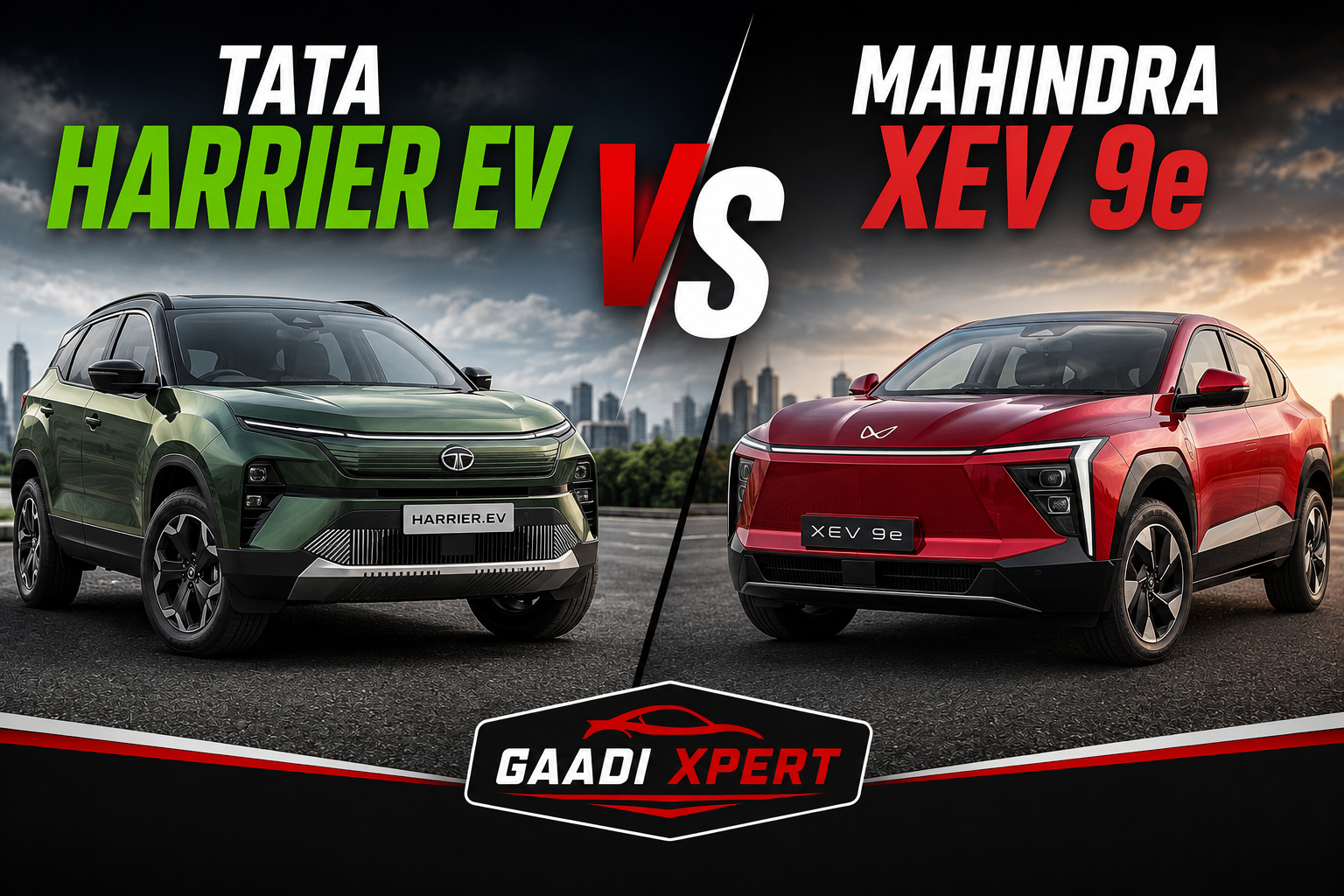
The Indian electric SUV market is evolving rapidly, and the Tata Harrier EV vs Mahindra XEV 9e comparison has become one of the most searched topics among EV buyers. Tata Motors has entered the premium electric SUV space with the Harrier EV, while Mahindra is making a strong statement with the futuristic XEV 9e. Both SUVs promise long driving range, cutting-edge technology, premium interiors, and advanced safety features, making them attractive options for families as well as enthusiasts.
Choosing between these two electric SUVs is not easy because each one offers a different driving experience and ownership philosophy. Tata has focused on rugged capability, practical usability, and proven EV technology, whereas Mahindra has designed the XEV 9e as a technology-first premium electric coupe SUV with an emphasis on futuristic styling and connected features.
This detailed Tata Harrier EV vs Mahindra XEV 9e comparison will help you understand the differences in pricing, exterior styling, dimensions, cabin space, technology, battery options, performance, range, safety, and ownership costs. By the end of this comparison, you’ll have a clear idea of which premium electric SUV deserves a place in your garage.
Tata Harrier EV vs Mahindra XEV 9e: Price and Variants
Pricing is often the first factor buyers consider when comparing premium electric SUVs. While both vehicles target similar customers, their positioning is slightly different.
The Tata Harrier EV has been launched with multiple variants, allowing buyers to choose between different battery capacities and drivetrain options. Tata has aimed to make the Harrier EV competitive by offering a strong feature list even in lower variants.
The Mahindra XEV 9e follows Mahindra’s new premium electric strategy and is available with multiple battery configurations. It targets buyers looking for advanced technology, luxury features, and strong electric performance.
Expected Ex-Showroom Price
| Model | Expected Price Range |
|---|---|
| Tata Harrier EV | ₹21.5 lakh – ₹30 lakh |
| Mahindra XEV 9e | ₹21.9 lakh – ₹31.5 lakh |
Although prices are very close, the Tata Harrier EV vs Mahindra XEV 9e comparison reveals different value propositions. Tata focuses on practicality and off-road capability, while Mahindra packs more futuristic technology into the higher variants.
Available Variants
Tata Harrier EV
- Adventure
- Fearless
- Empowered
- AWD Variant (Higher Trim)
Mahindra XEV 9e
- Pack One
- Pack Two
- Pack Three Select
- Pack Three
The Tata Harrier EV vs Mahindra XEV 9e comparison shows that both manufacturers offer multiple trims, allowing buyers to select a variant based on budget and equipment requirements.
Tata Harrier EV vs Mahindra XEV 9e: Exterior Design Comparison
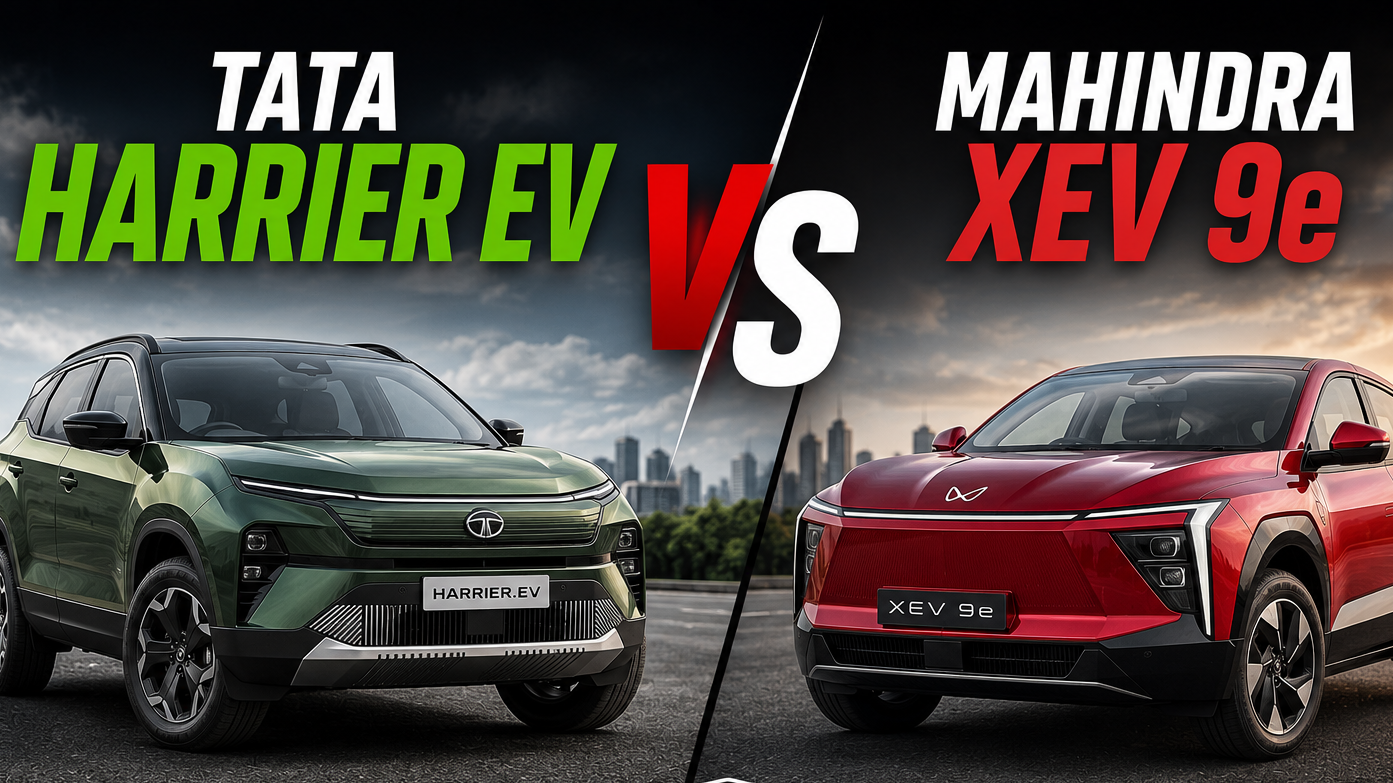
Design is one of the biggest highlights in the Tata Harrier EV vs Mahindra XEV 9e comparison. Both SUVs have completely different personalities and are likely to appeal to different buyers.
Tata Harrier EV Design
The Tata Harrier EV retains the muscular proportions of the standard Harrier while introducing several EV-specific styling elements. A closed-off front grille, connected LED daytime running lights, redesigned bumpers, aero-optimized alloy wheels, and illuminated branding give it a modern appearance without losing its rugged SUV identity.
The upright stance, wide wheel arches, and strong shoulder lines create a bold road presence. Unlike many futuristic EVs, the Harrier EV continues to look like a traditional SUV, which will appeal to buyers who prefer a robust and commanding design.
Tata Harrier EV Exterior Highlights
- Connected LED DRLs
- Closed front grille
- Aerodynamic alloy wheels
- Vertical LED lighting signature
- High ground clearance
- Premium dual-tone colour options
- Strong SUV proportions
Mahindra XEV 9e Design
The Mahindra XEV 9e takes a completely different approach. It features a coupe-inspired roofline, sleek body panels, illuminated lighting elements, flush door handles, and a highly aerodynamic silhouette.
The front fascia includes a full-width LED light bar that gives the SUV a futuristic identity. Sharp character lines, sculpted surfaces, and large alloy wheels enhance its premium appeal.
Unlike the Harrier EV, the XEV 9e prioritizes aerodynamic efficiency alongside aesthetics. The sloping roofline gives it a sportier appearance but slightly changes the traditional SUV profile.
Mahindra XEV 9e Exterior Highlights
- Full-width LED light bar
- Flush door handles
- Coupe-inspired roofline
- Illuminated Mahindra logo
- Large aerodynamic alloy wheels
- Sculpted rear design
- Premium metallic colour options
When comparing Tata Harrier EV vs Mahindra XEV 9e, buyers who prefer a rugged SUV design may gravitate toward the Harrier EV, while those looking for a futuristic premium electric vehicle are likely to appreciate the XEV 9e.
Tata Harrier EV vs Mahindra XEV 9e: Dimensions and Road Presence
Dimensions play a major role in practicality, interior space, and overall road presence.
The Tata Harrier EV shares much of its body structure with the latest Harrier, giving it an imposing stance on Indian roads. The tall bonnet, squared wheel arches, and wide track contribute to its commanding appearance.
The Mahindra XEV 9e is slightly more aerodynamic due to its coupe-like profile. Although the roofline slopes towards the rear, Mahindra has carefully balanced style and cabin usability.
Dimension Comparison
| Specification | Tata Harrier EV | Mahindra XEV 9e |
|---|---|---|
| Length | Approx. 4,607 mm | Approx. 4,789 mm |
| Width | Approx. 1,922 mm | Approx. 1,907 mm |
| Height | Approx. 1,740 mm | Approx. 1,694 mm |
| Wheelbase | Approx. 2,741 mm | Approx. 2,775 mm |
The Tata Harrier EV vs Mahindra XEV 9e comparison indicates that the XEV 9e is longer and benefits from a slightly longer wheelbase, which could improve rear legroom. On the other hand, the Harrier EV is taller, offering a more upright seating position and better visibility.
Tata Harrier EV vs Mahindra XEV 9e: Road Presence
Road presence is subjective, but both SUVs attract attention for different reasons.
The Tata Harrier EV looks tough, premium, and unmistakably SUV-like. Buyers upgrading from diesel or petrol SUVs will immediately feel familiar with its stance.
The Mahindra XEV 9e, however, looks like a next-generation electric vehicle. Its sleek profile, futuristic lighting, and coupe styling make it stand out in traffic and give it a stronger premium EV identity.
Which Looks Better?
Choose the Tata Harrier EV if you prefer:
- Bold SUV styling
- Rugged appearance
- Traditional proportions
- Higher seating stance
- Strong road presence
Choose the Mahindra XEV 9e if you prefer:
- Futuristic EV styling
- Coupe SUV design
- Premium luxury appearance
- Aerodynamic body
- Modern lighting signature
The Tata Harrier EV vs Mahindra XEV 9e comparison clearly shows that neither design is objectively better. Instead, Tata appeals to buyers who love muscular SUVs, while Mahindra targets customers looking for a futuristic premium electric vehicle with standout styling.
Tata Harrier EV vs Mahindra XEV 9e: Interior and Cabin Quality
The cabin is where owners spend most of their time, making interior quality a major factor in the Tata Harrier EV vs Mahindra XEV 9e comparison. Both electric SUVs offer premium materials, large digital displays, and feature-loaded cabins, but their design philosophies are completely different.
The Tata Harrier EV follows Tata Motors’ modern premium SUV approach with a clean dashboard layout, soft-touch materials, leatherette upholstery, and practical storage spaces. The cabin feels familiar to existing Tata owners while introducing several EV-specific design elements.
The Mahindra XEV 9e adopts a futuristic cockpit inspired by global luxury EVs. The dashboard is dominated by multiple digital displays, ambient lighting, minimal physical buttons, and a layered dashboard design that immediately gives a high-tech impression.
For buyers looking at Tata Harrier EV vs Mahindra XEV 9e, the decision comes down to whether you prefer a practical luxury cabin or a futuristic digital experience.
Tata Harrier EV vs Mahindra XEV 9e: Dashboard Design
Dashboard design defines the first impression of any modern SUV.
Tata Harrier EV Dashboard
The Tata Harrier EV offers a wide horizontal dashboard with premium soft-touch finishes and metallic accents. The floating infotainment display integrates neatly with the center console, while the digital instrument cluster provides EV-specific information such as battery level, regeneration status, energy flow, and driving efficiency.
The overall layout focuses on ease of use. Physical controls for commonly used functions remain available, allowing drivers to operate important features without navigating multiple touchscreen menus.
Tata Harrier EV Dashboard Highlights
- Premium soft-touch dashboard
- Large floating touchscreen
- Fully digital instrument cluster
- Premium leatherette finish
- Ambient lighting
- Wireless charging pad
- Physical climate control shortcuts
Mahindra XEV 9e Dashboard
The Mahindra XEV 9e takes a much more futuristic approach. One of its biggest highlights is the panoramic triple-screen layout stretching across the dashboard. This setup combines the driver’s display, infotainment screen, and passenger display into one visually striking unit.
The center console features minimal physical buttons, emphasizing a clean and technology-focused design. Premium upholstery, customizable ambient lighting, and modern switchgear further enhance the cabin.
Mahindra XEV 9e Dashboard Highlights
- Triple-screen panoramic display
- Premium digital cockpit
- Multi-colour ambient lighting
- Minimalist center console
- Premium upholstery
- Touch-based controls
- Modern floating center tunnel
In the Tata Harrier EV vs Mahindra XEV 9e comparison, Mahindra clearly targets buyers looking for a futuristic cabin, while Tata balances modern technology with everyday usability.
Tata Harrier EV vs Mahindra XEV 9e: Seating Comfort and Space
Comfort is one of the strongest selling points of premium SUVs.
The Tata Harrier EV offers wide front seats with excellent cushioning and support. The upright seating position provides outstanding visibility, making the SUV comfortable during city driving and long-distance touring. Rear passengers benefit from generous headroom, comfortable thigh support, and ample shoulder room.
The Mahindra XEV 9e also delivers impressive seating comfort. Thanks to its longer wheelbase, rear passengers enjoy excellent legroom. However, the coupe-style roofline slightly reduces rear headroom compared to the Harrier EV, especially for taller occupants.
Front Seat Comfort
Tata Harrier EV
- Large supportive seats
- Ventilated front seats
- Powered seat adjustment
- Comfortable driving position
- Better outward visibility
Mahindra XEV 9e
- Sporty premium seats
- Ventilation function
- Powered adjustment
- Premium cushioning
- Driver-focused seating position
The Tata Harrier EV vs Mahindra XEV 9e comparison suggests that both SUVs offer excellent front-seat comfort, but Tata’s upright seating position may be preferred for long highway journeys.
Tata Harrier EV vs Mahindra XEV 9e: Rear Seat Experience
Rear-seat comfort is equally important for Indian families.
The Tata Harrier EV benefits from its traditional SUV shape, providing generous headroom and easy ingress and egress. The nearly flat floor also improves comfort for the middle passenger.
The Mahindra XEV 9e offers impressive rear legroom due to its longer wheelbase. However, the sloping roofline means taller passengers may notice slightly reduced headroom.
Rear Cabin Highlights
Tata Harrier EV
- Better headroom
- Flat floor design
- Adjustable rear armrest
- Rear AC vents
- USB charging ports
Mahindra XEV 9e
- Longer rear legroom
- Premium rear seats
- Rear climate control
- Fast USB charging
- Premium ambient lighting
For family buyers comparing Tata Harrier EV vs Mahindra XEV 9e, the Harrier EV may have a slight advantage in overall rear-seat practicality, while the XEV 9e offers a more premium lounge-like feel.
Tata Harrier EV vs Mahindra XEV 9e: Boot Space and Practicality
Electric SUVs should offer practical luggage space despite housing large battery packs.
The Tata Harrier EV provides a large luggage compartment suitable for family travel, airport transfers, and weekend road trips. The wide tailgate opening makes loading bulky items easier.
The Mahindra XEV 9e also offers generous cargo capacity, and its longer body helps maximize usable boot space. Depending on the variant, buyers may also get additional storage solutions inside the cabin.
Practical Features
Tata Harrier EV
- Large luggage compartment
- Wide loading opening
- Split-folding rear seats
- Multiple storage spaces
- Large door pockets
Mahindra XEV 9e
- Spacious boot
- Premium storage layout
- Foldable rear seats
- Hidden storage compartments
- Multiple charging points
The Tata Harrier EV vs Mahindra XEV 9e comparison indicates that both SUVs are practical enough for daily use and long family vacations.
Tata Harrier EV vs Mahindra XEV 9e: Features and Technology
Technology is where these two premium electric SUVs compete aggressively.
The Tata Harrier EV comes equipped with an extensive list of comfort, convenience, and connected features. Tata has focused on delivering technology that improves everyday usability while maintaining intuitive controls.
The Mahindra XEV 9e raises the bar further by introducing several premium digital experiences usually seen in much more expensive luxury EVs.
Tata Harrier EV Expected Features
- Large touchscreen infotainment system
- Fully digital instrument cluster
- Wireless Android Auto
- Wireless Apple CarPlay
- Connected car technology
- Ventilated front seats
- Panoramic sunroof
- Premium JBL sound system (variant dependent)
- Wireless charging
- Multi-drive modes
Mahindra XEV 9e Expected Features
- Triple-screen dashboard
- Premium Harman audio system
- Wireless smartphone connectivity
- Panoramic glass roof
- Ventilated seats
- Digital key functionality
- Connected vehicle suite
- OTA software updates
- AI-enabled voice assistant
- Multi-zone ambient lighting
In the Tata Harrier EV vs Mahindra XEV 9e comparison, Mahindra takes the lead in futuristic digital technology, while Tata delivers an excellent balance between premium equipment and ease of operation.
Tata Harrier EV vs Mahindra XEV 9e: Infotainment Experience
Infotainment has become one of the most important buying factors in premium SUVs.
The Tata Harrier EV offers a large, responsive infotainment system with wireless smartphone integration, connected navigation, voice commands, and EV-specific charging information.
The Mahindra XEV 9e goes one step further by combining entertainment, navigation, and passenger interaction across its triple-screen layout. This creates a more immersive digital environment, particularly during long journeys.
The Tata Harrier EV vs Mahindra XEV 9e comparison highlights two different approaches. Tata focuses on simplicity and user-friendliness, whereas Mahindra emphasizes innovation and digital luxury.
Tata Harrier EV vs Mahindra XEV 9e: Cabin Experience Verdict
Both SUVs deliver premium interiors, but they target different customer preferences.
Choose the Tata Harrier EV if you value:
- Practical dashboard layout
- Better rear headroom
- Familiar controls
- Comfortable family-oriented cabin
- Traditional SUV ergonomics
Choose the Mahindra XEV 9e if you value:
- Futuristic triple-screen dashboard
- Premium digital experience
- Modern luxury ambience
- Advanced infotainment
- Technology-first cabin design
Overall, the Tata Harrier EV vs Mahindra XEV 9e comparison shows that Tata excels in practicality and comfort, while Mahindra pushes the segment forward with a highly futuristic interior and technology-rich experience.
Tata Harrier EV vs Mahindra XEV 9e: Battery Pack Comparison
The battery pack is the heart of any electric vehicle, and it plays a major role in the Tata Harrier EV vs Mahindra XEV 9e comparison. Battery capacity directly influences driving range, charging time, and overall performance.
Tata Motors offers the Harrier EV with multiple battery options, giving buyers the flexibility to choose according to their budget and driving requirements. The larger battery pack is designed for customers who frequently travel long distances, while the smaller pack keeps the SUV more affordable.
Mahindra has developed the XEV 9e on its dedicated INGLO electric platform, allowing it to accommodate larger battery packs without compromising cabin space. The dedicated EV architecture also improves weight distribution and structural rigidity.
For buyers comparing Tata Harrier EV vs Mahindra XEV 9e, both SUVs deliver competitive battery technology, but Mahindra’s dedicated EV platform provides additional flexibility for future upgrades.
Battery Specifications
| Specification | Tata Harrier EV | Mahindra XEV 9e |
|---|---|---|
| Battery Options | 65 kWh & 75 kWh | 59 kWh & 79 kWh |
| Battery Type | Lithium-Ion | Lithium-Ion |
| Platform | acti.ev+ Architecture | INGLO Platform |
| Drivetrain | RWD & AWD (variant dependent) | RWD |
The Tata Harrier EV vs Mahindra XEV 9e comparison clearly shows that both manufacturers have focused on offering battery options suitable for different customer needs.
Tata Harrier EV vs Mahindra XEV 9e: Power and Torque
Performance is one of the biggest reasons buyers upgrade to premium electric SUVs.
The Tata Harrier EV delivers instant electric torque, smooth acceleration, and confident highway performance. Higher variants equipped with dual-motor all-wheel drive offer significantly better traction on wet roads and rough terrain.
The Mahindra XEV 9e focuses on delivering strong rear-wheel-drive dynamics. Its electric motor produces impressive power figures, ensuring quick acceleration while maintaining excellent efficiency.
Expected Performance
| Specification | Tata Harrier EV | Mahindra XEV 9e |
|---|---|---|
| Maximum Power | Up to 390 PS (AWD) | Up to 286 PS |
| Peak Torque | Up to 504 Nm | Up to 380 Nm |
| Drivetrain | RWD / AWD | RWD |
The Tata Harrier EV vs Mahindra XEV 9e comparison indicates that the Harrier EV has a noticeable advantage in outright performance, especially in dual-motor variants.
Tata Harrier EV vs Mahindra XEV 9e: Acceleration and Driving Performance
Electric vehicles are known for their instant acceleration, and both SUVs deliver a premium driving experience.
The Tata Harrier EV accelerates effortlessly thanks to its powerful electric motors. Instant torque makes overtaking easy, while the available all-wheel-drive system enhances confidence during challenging road conditions.
The Mahindra XEV 9e feels equally responsive in urban driving. The dedicated EV platform keeps the center of gravity low, improving stability during high-speed cruising and cornering.
Driving Modes
Both SUVs are expected to offer multiple drive modes, including:
- Eco
- City
- Sport
The Tata Harrier EV also benefits from terrain modes on AWD variants, making it more versatile for buyers who occasionally drive on gravel roads or hilly regions.
When evaluating Tata Harrier EV vs Mahindra XEV 9e, the Harrier EV stands out for versatility, while the XEV 9e emphasizes smooth and refined everyday performance.
Tata Harrier EV vs Mahindra XEV 9e: Driving Range
Driving range remains one of the most important considerations for EV buyers.
The Tata Harrier EV delivers a competitive certified driving range depending on the battery pack selected. Under real-world conditions, owners can expect enough range for daily commuting as well as long intercity journeys.
The Mahindra XEV 9e also offers an impressive claimed range, particularly with the larger battery option. Thanks to aerodynamic design and an efficient powertrain, it is expected to remain competitive during highway driving.
Expected Range
| Variant | Expected Certified Range |
|---|---|
| Tata Harrier EV | Up to approximately 627 km |
| Mahindra XEV 9e | Up to approximately 656 km |
Actual driving range depends on traffic, driving style, terrain, climate, and accessory usage.
In the Tata Harrier EV vs Mahindra XEV 9e comparison, Mahindra offers a slight advantage in certified range, while Tata balances efficiency with stronger performance.
Tata Harrier EV vs Mahindra XEV 9e: Charging Speed
Charging convenience significantly influences the ownership experience.
The Tata Harrier EV supports both AC home charging and DC fast charging. Home charging is suitable for overnight use, while compatible DC chargers can recharge the battery much faster during long-distance travel.
The Mahindra XEV 9e also supports high-speed DC charging along with AC charging solutions. Its charging capability is designed to reduce waiting time during highway journeys.
Charging Comparison
| Feature | Tata Harrier EV | Mahindra XEV 9e |
|---|---|---|
| AC Charging | Supported | Supported |
| DC Fast Charging | Supported | Supported |
| Home Wall Box | Available | Available |
| Regenerative Braking | Yes | Yes |
The Tata Harrier EV vs Mahindra XEV 9e comparison suggests that both SUVs provide practical charging solutions for daily ownership.
Tata Harrier EV vs Mahindra XEV 9e: Ride Quality and Handling
Ride quality often determines how enjoyable an SUV feels during daily driving.
The Tata Harrier EV benefits from suspension tuning that prioritizes comfort while maintaining stability at highway speeds. The battery pack positioned low in the chassis helps reduce body roll, improving confidence through corners.
The Mahindra XEV 9e offers a slightly sportier driving experience. Its dedicated EV platform and balanced weight distribution help deliver predictable handling and responsive steering.
Tata Harrier EV Ride Highlights
- Comfortable suspension
- Stable highway performance
- Strong AWD capability (selected variants)
- Confident rough-road performance
- SUV-focused driving position
Mahindra XEV 9e Ride Highlights
- Balanced chassis
- Precise steering
- Smooth urban driving
- Sportier handling
- Lower center of gravity
The Tata Harrier EV vs Mahindra XEV 9e comparison reveals two distinct personalities. The Harrier EV feels more rugged and versatile, while the XEV 9e delivers a refined and sporty driving experience.
Tata Harrier EV vs Mahindra XEV 9e: Safety Features
Safety remains one of the strongest priorities for premium electric SUV buyers.
The Tata Harrier EV includes a comprehensive safety package featuring:
- Six airbags
- Electronic Stability Control
- ABS with EBD
- Hill Hold Assist
- Hill Descent Control
- 360-degree camera
- Front and rear parking sensors
- Electronic Parking Brake
- ISOFIX child-seat mounts
The Mahindra XEV 9e offers a similarly impressive package:
- Multiple airbags
- Electronic Stability Control
- 360-degree camera
- Blind Spot Monitoring
- Front and rear parking sensors
- Electronic Parking Brake
- ISOFIX anchors
- Advanced braking systems
The Tata Harrier EV vs Mahindra XEV 9e comparison shows that both SUVs are well-equipped for family safety.
Tata Harrier EV vs Mahindra XEV 9e: ADAS Comparison
Advanced Driver Assistance Systems (ADAS) have become a key differentiator in the premium SUV segment.
The Tata Harrier EV is equipped with Level 2 ADAS features such as:
- Adaptive Cruise Control
- Lane Keep Assist
- Lane Departure Warning
- Automatic Emergency Braking
- Forward Collision Warning
- Traffic Sign Recognition
- High Beam Assist
The Mahindra XEV 9e also offers an advanced Level 2 ADAS suite that includes:
- Adaptive Cruise Control
- Lane Centering Assist
- Automatic Emergency Braking
- Blind Spot Detection
- Rear Cross Traffic Alert
- Driver Attention Monitoring
- Intelligent Speed Assist
In the Tata Harrier EV vs Mahindra XEV 9e comparison, both SUVs deliver comprehensive ADAS technology. Mahindra emphasizes a broader connected safety ecosystem, while Tata combines advanced driver assistance with strong SUV capability and all-wheel-drive confidence on selected variants.
Tata Harrier EV vs Mahindra XEV 9e: Maintenance and Ownership Cost
Owning an electric SUV is about more than just the purchase price. Long-term maintenance, charging costs, warranty coverage, and resale value all influence the total cost of ownership. In the Tata Harrier EV vs Mahindra XEV 9e comparison, both SUVs promise lower running costs than similarly priced petrol or diesel SUVs, but there are important differences buyers should consider.
The Tata Harrier EV benefits from Tata Motors’ well-established EV ecosystem in India. With an extensive dealership and service network, Harrier EV owners are likely to find easier access to maintenance and genuine spare parts across the country.
The Mahindra XEV 9e also benefits from Mahindra’s expanding EV service infrastructure. As the company continues investing in its Born Electric lineup, customers can expect specialized EV service centers and improved charging support in major cities.
For buyers comparing Tata Harrier EV vs Mahindra XEV 9e, Tata currently has a slight advantage in nationwide EV experience, while Mahindra is rapidly strengthening its premium electric ecosystem.
Tata Harrier EV vs Mahindra XEV 9e: Running Cost
Electric SUVs generally cost significantly less to run than conventional fuel-powered vehicles.
Charging the Tata Harrier EV at home can substantially reduce daily operating expenses, especially for urban commuters. Regenerative braking also helps improve driving efficiency in city traffic.
The Mahindra XEV 9e delivers similar advantages, combining an efficient electric powertrain with multiple regeneration levels to maximize usable range.
Ownership Comparison
| Category | Tata Harrier EV | Mahindra XEV 9e |
|---|---|---|
| Home Charging Cost | Low | Low |
| Service Frequency | Lower than ICE SUV | Lower than ICE SUV |
| Engine Oil Changes | Not Required | Not Required |
| Brake Wear | Reduced due to Regeneration | Reduced due to Regeneration |
| Overall Running Cost | Very Low | Very Low |
The Tata Harrier EV vs Mahindra XEV 9e comparison shows that both SUVs are economical to own compared with traditional internal combustion vehicles.
Tata Harrier EV vs Mahindra XEV 9e: Warranty and After-Sales Support
Warranty coverage plays a major role in buyer confidence.
Tata Motors offers comprehensive warranty packages for both the vehicle and the high-voltage battery, giving customers additional peace of mind. The company’s rapidly growing EV ecosystem includes charging solutions, roadside assistance, and software updates.
Mahindra also provides competitive warranty coverage with dedicated support for its Born Electric lineup. Over-the-air software updates and connected vehicle services are expected to keep the XEV 9e updated throughout ownership.
Why Warranty Matters
- Lower long-term ownership risk
- Better battery confidence
- Improved resale value
- Peace of mind during long-distance travel
- Protection against unexpected repair costs
In the Tata Harrier EV vs Mahindra XEV 9e comparison, both manufacturers offer reassuring ownership packages, although buyers should always verify the latest warranty terms before purchase.
Tata Harrier EV vs Mahindra XEV 9e: Pros and Cons
Tata Harrier EV
Pros
- Bold SUV styling
- Available all-wheel-drive option
- Excellent road presence
- Comfortable family-oriented cabin
- Strong performance
- Practical interior layout
- Extensive Tata EV ecosystem
- Better rough-road capability
Cons
- Cabin design is more conventional
- Technology experience is less futuristic than the XEV 9e
- Higher variants can become expensive
Mahindra XEV 9e
Pros
- Futuristic coupe SUV design
- Premium triple-screen dashboard
- Long claimed driving range
- Dedicated INGLO EV platform
- Advanced connected technology
- Excellent highway refinement
- Modern luxury cabin
Cons
- Sloping roof reduces rear headroom
- No AWD option currently
- Premium variants carry a higher price
The Tata Harrier EV vs Mahindra XEV 9e comparison clearly shows that Tata emphasizes practicality and versatility, while Mahindra prioritizes futuristic design and digital innovation.
Tata Harrier EV vs Mahindra XEV 9e: Competitors
These premium electric SUVs compete against several strong rivals in India, including:
- Hyundai Creta Electric (top variants)
- BYD Atto 3
- MG ZS EV
- MG Windsor EV (higher variants)
- Upcoming Maruti e Vitara
- Kia Carens Clavis EV (higher trims)
Despite increasing competition, the Tata Harrier EV vs Mahindra XEV 9e comparison remains one of the most important battles in the premium electric SUV segment because both vehicles offer modern technology, long driving range, and strong brand recognition.
Tata Harrier EV vs Mahindra XEV 9e: Which One Should You Buy?
Both SUVs are excellent choices, but they cater to different buyers.
Buy the Tata Harrier EV if you want:
- Traditional SUV styling
- All-wheel-drive capability
- Better rough-road performance
- Practical family cabin
- Wider service support
- Proven Tata EV ecosystem
Buy the Mahindra XEV 9e if you want:
- Futuristic coupe SUV design
- Premium digital cockpit
- Triple-screen dashboard
- Longer claimed driving range
- Advanced connected technology
- Sportier driving experience
The Tata Harrier EV vs Mahindra XEV 9e comparison ultimately depends on your priorities. Families and adventure-focused buyers may prefer the Harrier EV, while technology enthusiasts looking for a futuristic premium EV are likely to appreciate the XEV 9e.
⭐ Gaadi Xpert Verdict
After comparing design, interior quality, technology, battery options, range, charging, safety, ride quality, ownership costs, and overall practicality, here is our final verdict.
| Category | Winner |
|---|---|
| Exterior Design | Mahindra XEV 9e |
| Road Presence | Tata Harrier EV |
| Interior Technology | Mahindra XEV 9e |
| Cabin Practicality | Tata Harrier EV |
| Performance | Tata Harrier EV (AWD) |
| Claimed Driving Range | Mahindra XEV 9e |
| Ride Comfort | Tata Harrier EV |
| Handling | Mahindra XEV 9e |
| Safety | Tie |
| ADAS | Tie |
| Ownership Experience | Tata Harrier EV |
| Value for Money | Tata Harrier EV |
Overall Rating
Tata Harrier EV – 9.4/10 ⭐⭐⭐⭐⭐
Mahindra XEV 9e – 9.3/10 ⭐⭐⭐⭐⭐
The Tata Harrier EV vs Mahindra XEV 9e comparison proves that there is no clear loser. The Harrier EV stands out with its SUV practicality, available all-wheel-drive capability, comfortable ride, and established EV ecosystem. The XEV 9e impresses with futuristic styling, an advanced digital cabin, and a slightly longer claimed range.
If your priority is a versatile family SUV with strong all-round capability, the Tata Harrier EV is the better choice. If you want a technology-focused premium electric SUV with standout styling and a futuristic cabin, the Mahindra XEV 9e is equally compelling.
Frequently Asked Questions (FAQs)
1. Which is better: Tata Harrier EV or Mahindra XEV 9e?
The Tata Harrier EV vs Mahindra XEV 9e comparison suggests the Harrier EV is better for practicality and versatility, while the XEV 9e excels in technology and futuristic design.
2. Which SUV offers a longer driving range?
The Mahindra XEV 9e offers a slightly higher claimed certified driving range with its larger battery option.
3. Does Tata Harrier EV offer AWD?
Yes, selected higher variants of the Tata Harrier EV are available with an all-wheel-drive system.
4. Which SUV is better for family use?
The Tata Harrier EV offers a more upright cabin, better rear headroom, and stronger overall practicality for family buyers.
5. Which electric SUV has the better interior?
The Mahindra XEV 9e provides a more futuristic interior with its triple-screen dashboard, while the Tata Harrier EV focuses on practicality and ease of use.
6. Which SUV offers better value for money?
Considering pricing, practicality, ownership experience, and versatility, the Tata Harrier EV vs Mahindra XEV 9e comparison gives a slight edge to the Tata Harrier EV.
Hyundai Creta Electric VS TATA Curvv EV