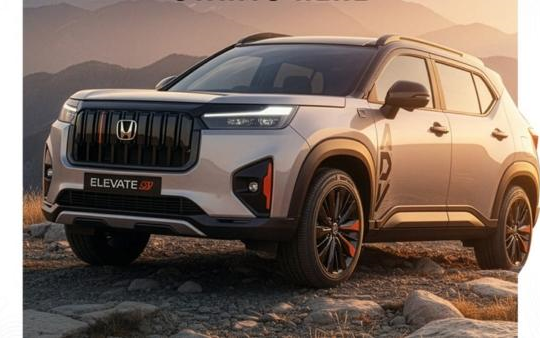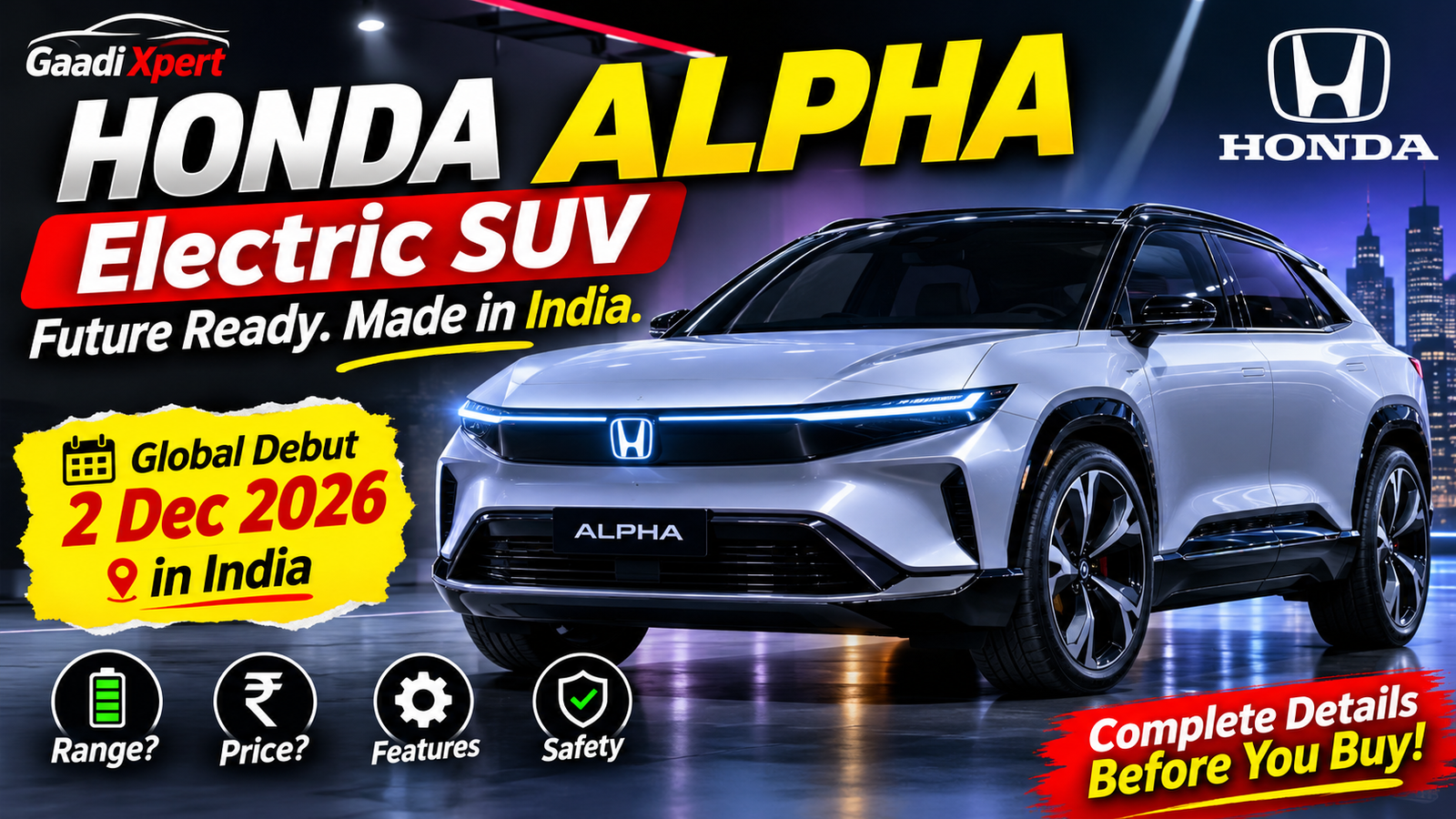
Honda is preparing for a major change in its Indian car portfolio. The Japanese automaker, known for models such as the City, Amaze and Elevate, is entering the electric SUV segment with a new model called the Honda ALPHA Electric SUV. Unlike a conventional petrol-powered SUV, the ALPHA has been developed around Honda’s next-generation electric vehicle strategy.
The upcoming SUV has already attracted attention because Honda has selected India for its global debut. The company officially announced the ALPHA name on November 3, 2026, and confirmed that the production model will make its global debut in India on December 2, 2026. Honda also plans to manufacture the vehicle in India for domestic customers and international markets.
The ALPHA follows the Honda 0 α concept, which made its world premiere at the Japan Mobility Show in October 2025. That concept introduced a distinctive design direction built around a spacious cabin, carefully managed proportions and a minimalist exterior.
However, the production SUV still has several important details to reveal. Honda has not officially announced its battery capacity, driving range, motor output, charging speed or price. Buyers should therefore distinguish confirmed information from industry expectations.
In this Gaadi Xpert report, we examine the Honda ALPHA’s design, expected interior, electric powertrain, possible range, safety priorities, India manufacturing plans and competition. We also explain what buyers should check before deciding whether to wait for Honda’s new electric SUV.
Honda ALPHA Electric SUV: Launch Date and Latest Update
Honda Cars India officially announced the name Honda ALPHA on November 3, 2026. The company confirmed that the SUV will make its global debut in India on December 2, 2026. India will become the first market to introduce the model.
Honda originally presented the Honda 0 α prototype at the Japan Mobility Show 2025. The prototype formed part of the company’s Honda 0 Series electric vehicle family and represented a new approach to electric SUV design.
Here are the key details available so far:
- Official model name: Honda ALPHA
- Vehicle category: All-electric SUV
- Global debut: December 2, 2026
- First market: India
- Manufacturing strategy: Made in India, with exports planned
- Expected production base: Honda’s Tapukara facility in Rajasthan
- Battery capacity: Not officially announced
- Driving range: Not officially announced
- Motor power: Not officially announced
- Official price: Not announced
- Sales timeline: Honda previously indicated a 2027 global sales target for the production model
The December 2 event will be important because it should provide a clearer picture of the production vehicle. Buyers will be looking for final exterior details, cabin equipment, battery specifications, charging capabilities and information about bookings and deliveries.
The debut date does not automatically mean that customer deliveries will begin on the same day. Honda must communicate the retail launch schedule separately.
Honda ALPHA Design: A Futuristic Electric SUV
The Honda 0 α concept established a design direction that differs from the styling of Honda’s existing petrol-powered SUVs. Rather than simply replacing a combustion engine with an electric motor, Honda developed a new exterior and packaging approach for its next-generation EV.
The company describes the Honda 0 Series development philosophy through three ideas: “Thin, Light, and Wise.” These principles focus on efficient vehicle packaging, reduced visual bulk and intelligent use of technology.
The ALPHA applies this approach to an SUV intended to work in both urban environments and more open surroundings.
Front Design
The original prototype features a clean front section with a broad, integrated panel rather than a conventional engine grille. Its lighting elements and illuminated Honda emblem form part of a more unified visual design.
An electric vehicle does not require the same front-end arrangement as a petrol SUV. Honda can therefore rethink the placement of lighting, charging access and other components while maintaining the cooling requirements of the battery and electric powertrain.
This gives the ALPHA an opportunity to establish a distinctive identity on Indian roads. The final production model may refine some concept elements to meet manufacturing, regulatory and cost requirements.
Side Profile and SUV Proportions
The Honda 0 α concept combines a relatively slim-looking cabin with a wide, stable stance. Honda designed its proportions to maintain SUV ground clearance while creating a less bulky appearance.
That balance matters in India, where buyers often use their vehicles on uneven roads, through crowded urban streets and over tall speed breakers. A low-looking roofline may improve the visual profile, but the actual ground clearance and approach angles will determine how well the SUV handles difficult road conditions.
Honda has also emphasised the relationship between the body panels, wheel arches and overall vehicle width. Rather than relying on numerous decorative lines, the concept uses carefully shaped surfaces to create visual strength.
Rear Design
The concept features a distinctive U-shaped rear lighting arrangement that integrates the tail lamps, reversing lamps and turn indicators into a unified design.
Its upright rear section also supports the practical character expected from an SUV. A well-designed tailgate can make it easier to load shopping bags, suitcases and other family luggage.
Honda has not yet announced the production model’s boot capacity, tailgate dimensions or final lighting specifications. Those details will help determine whether the ALPHA delivers the everyday practicality that Indian SUV buyers expect.
Overall, the design aims to combine a recognisable electric vehicle identity with useful SUV proportions. The production model’s final dimensions and styling will reveal how closely Honda retains the original concept.
Honda ALPHA Interior and Cabin Space
Interior design will be an important factor in the Honda ALPHA’s success. Buyers in this segment increasingly expect a spacious cabin, a modern infotainment system and convenient technology without sacrificing everyday usability.
Honda has positioned the 0 α concept as an entry point into its next-generation electric vehicle family. The company specifically highlighted occupant comfort and cabin packaging in its original concept announcement.
Dashboard and Infotainment
Images of pre-production test vehicles published by automotive media have indicated a large central infotainment touchscreen and a separate digital driver display. These observations offer useful clues, but Honda has not yet confirmed the final production equipment list.
A large touchscreen could handle navigation, media, connected services and vehicle settings. A separate driver display would allow the driver to check speed, battery status and remaining range without relying entirely on the central screen.
For an electric SUV, the software experience matters beyond entertainment. Drivers need clear information about charging locations, energy consumption, estimated remaining range and charging progress.
Honda will also need to make frequently used controls easy to access. Physical buttons for important functions can be useful when drivers need to adjust settings without navigating multiple touchscreen menus.
Passenger Comfort
An electric platform offers different packaging opportunities from a conventional petrol vehicle because it does not require the same engine and transmission layout. However, the battery pack can raise the cabin floor, so engineers must balance battery placement with seating comfort.
Honda’s design approach places importance on cabin space and occupant comfort. The final result will depend on rear-seat legroom, headroom, seat cushioning, floor height and the shape of the rear bench.
For Indian families, rear-seat comfort can be just as important as front-seat technology. The ALPHA will need to accommodate adults comfortably during city commutes and longer highway journeys.
Boot Space and Practicality
The upright rear design could help the ALPHA offer a useful luggage compartment, although Honda has not released an official boot-capacity figure.
Buyers should examine the shape of the boot, the loading height, rear-seat folding arrangement and the space available when carrying a full load of passengers. These details can make a real difference during family holidays and airport journeys.
The production SUV’s cabin and luggage measurements will provide a better basis for comparison with other electric SUVs than exterior styling alone.
Honda ALPHA Battery, Motor and Performance
The battery and motor will determine how the Honda ALPHA performs in daily driving and on longer journeys.
Honda has not yet published the production SUV’s complete technical specifications. This means buyers cannot currently compare its official battery capacity, motor output, torque, acceleration or maximum charging rate with rival models.
Some automotive reports have suggested that the ALPHA could receive lithium iron phosphate batteries with capacities in the approximate 65kWh to 75kWh range. A single-motor, front-wheel-drive layout has also appeared in industry expectations. These figures and configurations remain unconfirmed until Honda releases the final specifications.
What Battery Technology Could Honda Use?
Lithium iron phosphate, commonly known as LFP, is one battery chemistry used in modern electric vehicles. It can offer advantages in cost, durability and thermal stability, depending on the battery design and operating conditions.
Battery chemistry alone does not determine an electric vehicle’s overall performance. Usable battery capacity, energy density, thermal management, charging control and vehicle efficiency all influence the ownership experience.
Honda’s final battery choice will need to balance price, driving range, packaging and the demands of Indian weather conditions.
Motor Power and Driving Experience
Electric motors deliver power without the conventional gear changes associated with petrol engines. This can make acceleration smooth and responsive, particularly in stop-and-go city traffic.
A front-wheel-drive configuration could help Honda manage cost and efficiency if the company chooses that arrangement for the production model. However, the drivetrain has not been officially confirmed.
Motor output and torque will determine how quickly the SUV accelerates and how confidently it overtakes on highways. Vehicle weight, tyre selection and power delivery calibration will also affect handling and ride comfort.
Honda’s engineering challenge will be to create an electric SUV that feels predictable and comfortable in traffic while delivering enough performance for highway use.
Regenerative Braking
Regenerative braking allows an electric vehicle to recover some energy during deceleration and send it back to the battery. The system can also reduce reliance on conventional friction brakes in suitable driving conditions.
Reports from prototype testing have shown controls that appear to relate to regenerative braking, but Honda has not confirmed the final production system or its operating modes.
The quality of regenerative braking calibration matters because drivers need predictable responses when slowing down, especially in crowded urban traffic.
Honda ALPHA Range and Charging
Driving range will be one of the biggest questions for prospective Honda ALPHA buyers. It will determine how often owners need to charge the vehicle and how practical it will be for longer journeys.
Honda has not announced an official range figure or charging specification for the production SUV. Any numerical range estimate published before the official reveal should therefore be treated as an estimate rather than a confirmed claim.
Expected Driving Range
Battery capacity and vehicle efficiency work together to determine driving range. A larger battery can store more energy, but a vehicle’s weight, aerodynamics, tyres and powertrain efficiency influence how far it travels on that energy.
Buyers should compare the official certified range with real-world driving expectations. Laboratory figures provide a standardised basis for comparison, but traffic, weather, speed, passenger load and air-conditioning use can affect actual results.
For Indian customers, dependable range is often more valuable than a headline figure that does not reflect normal driving conditions.
Home Charging
Home charging can make electric vehicle ownership convenient for people with a suitable parking space and electrical connection.
Owners can charge overnight and begin the next day with a replenished battery. This arrangement may reduce the need to visit public charging stations frequently, particularly for people with predictable daily commutes.
The actual charging time will depend on battery capacity, charger power, charging losses and the vehicle’s onboard charging capability. Honda has not confirmed whether a home charger will be included with every variant or offered as a separate package.
DC Fast Charging
DC fast charging can help drivers replenish the battery during longer journeys. However, charging performance depends on both the charging station and the vehicle’s supported charging rate.
Charging also tends to slow as the battery approaches a high state of charge. As a result, the maximum charging rate alone does not tell the whole story.
Before buying the ALPHA, customers should check the official 10–80% charging time, maximum DC charging power, supported charging connector and battery preconditioning features, if available.
These details will help buyers determine whether the SUV suits their regular travel patterns.
Honda ALPHA Features and Technology
The production-model feature list remains unconfirmed, but the SUV’s positioning makes several areas worth examining when Honda reveals the final specifications.
Digital Technology
The large central touchscreen seen in prototype-related reports could become a major part of the cabin experience. Smartphone connectivity, navigation, voice controls and connected vehicle functions would be useful additions, depending on the final equipment package.
An electric vehicle also benefits from software that presents charging information clearly and helps drivers plan routes around compatible charging stations.
Comfort and Convenience
Automatic climate control, adjustable seating, rear AC vents, keyless entry and a useful storage layout would strengthen the ALPHA’s family appeal. Features such as ventilated seats, a panoramic roof or powered seating remain unconfirmed.
Honda will need to balance convenience features with price. Buyers should compare the standard equipment offered on each variant rather than assuming that every feature shown in a concept or test vehicle will reach the showroom.
Parking Assistance
Parking sensors and a reversing camera are useful for an SUV that will spend time in tight urban spaces. A 360-degree camera could also help drivers manoeuvre in narrow streets and crowded parking areas, if Honda offers it.
The final camera system, sensors and driver assistance features should be checked against the official Indian specification sheet.
Honda ALPHA Safety: What Buyers Should Check
Safety will be a major consideration for families buying an electric SUV. However, Honda has not yet published the complete production-model safety specification or a crash-test rating for the ALPHA.
The official reveal should clarify the availability of essential safety equipment, including airbags, electronic stability control, anti-lock braking and parking assistance.
Buyers should also check whether Honda offers advanced driver assistance systems and which features come as standard. The presence of a particular feature should not be assumed until the manufacturer confirms it.
Electric vehicles require careful engineering around their high-voltage electrical systems and battery packs. Battery protection, thermal management and electrical isolation all play important roles in overall vehicle safety.
A final assessment should also consider independent crash-test results when available, along with the manufacturer’s warranty terms and service support.
Honda ALPHA Expected Price in India
Honda has not announced the official price of the ALPHA. Automotive publications have published different estimates, but none should be treated as a confirmed showroom price.
The final price will depend on the battery configuration, standard equipment, localisation, manufacturing costs and variant strategy. A larger battery or more extensive equipment package could increase the price, while local sourcing and production scale may help Honda manage costs.
Why Indian Manufacturing Matters
Honda has confirmed that India will serve as the global production base for the ALPHA. The company’s Tapukara facility in Rajasthan is expected to play an important role in the project.
Local manufacturing can help a company build a domestic supplier network and reduce dependence on certain imported components. It can also support exports to selected international markets.
However, manufacturing a vehicle in India does not automatically guarantee a low price. Battery costs, imported technology, production volume and warranty expenses also affect the final retail price.
What Buyers Should Compare
Once Honda announces pricing, buyers should compare the complete package rather than looking only at the starting price.
Important factors include battery capacity, certified range, charging speed, standard safety equipment, comfort features and battery warranty coverage. The availability and cost of a home charger may also influence the overall purchase decision.
An attractive introductory price will matter, but long-term running costs and the ownership experience will ultimately determine value for money.
Honda ALPHA India Manufacturing and Global Strategy
Honda’s decision to give India the first global debut of the ALPHA highlights the importance of the Indian market in its electric vehicle plans.
The company has already tested the SUV on Indian roads. The testing programme allows engineers to assess how the vehicle responds to local traffic, road surfaces and climate conditions before the production model reaches customers.
Honda’s Tapukara plant in Rajasthan is expected to support manufacturing. The project also gives the company an opportunity to develop local production capabilities for a model intended to serve more than one market.
India presents a mix of opportunities and challenges for electric vehicles. Urban customers may value quiet operation and lower energy costs, while long-distance drivers need reliable charging infrastructure and predictable range.
The ALPHA must meet those needs without losing sight of the price sensitivity of the Indian passenger vehicle market.
Honda’s established dealer and service network could help customers feel more comfortable considering the brand’s first all-electric SUV in India. The company will still need to communicate its charging support, service procedures and battery warranty clearly.
Honda ALPHA vs Rivals: Which Electric SUVs Will It Challenge?
The Honda ALPHA will enter a competitive electric SUV market. Its closest rivals will depend on its final price, dimensions, battery capacity and equipment.
The Mahindra BE 6 offers a sporty design and a technology-focused identity. Honda will need to establish its own appeal through cabin comfort, efficiency, charging performance and pricing.
The Hyundai Creta Electric targets customers who want an electric version of a familiar SUV format. The ALPHA will need to compete on everyday usability, features and ownership costs.
The Maruti Suzuki e Vitara is another relevant model for buyers who value practicality and a broad service network. Honda will need to demonstrate the advantages of its electric platform and manufacturing strategy.
The upcoming Tata Sierra EV could also attract customers looking for a distinctive electric family SUV. Its final specifications and price will determine how closely it competes with Honda.
The MG ZS EV remains another useful reference point for customers comparing electric SUVs with a focus on technology and everyday driving.
These vehicles provide a starting point for comparison, but buyers should wait for confirmed Honda specifications and the final competitive price positioning before making a direct assessment.
Honda ALPHA vs Petrol SUVs: Should You Switch to Electric?
The ALPHA may attract customers who currently drive petrol-powered SUVs and want to explore electric mobility.
An electric vehicle can offer smooth acceleration, quiet operation and fewer routine maintenance requirements associated with a combustion engine. Home charging can also make daily use convenient when the owner has suitable parking and electrical access.
However, the decision depends on more than fuel savings. Buyers must consider the purchase price, charging access, daily distance, highway travel and battery warranty.
For people who travel predictable distances and can charge at home, an electric SUV could be an attractive option. Drivers who frequently cover long distances through areas with limited charging facilities may need to examine the charging network carefully before switching.
The ALPHA’s official range, charging performance and price will determine whether it offers a compelling alternative to conventional SUVs.
Honda ALPHA: Expected Advantages and Challenges
Potential Advantages
- A distinctive design based on Honda’s next-generation electric vehicle concept.
- An India-first global debut that highlights the market’s importance to Honda.
- Local manufacturing with potential benefits for supply-chain development.
- A cabin designed around passenger comfort and efficient packaging.
- The opportunity to offer a new electric SUV through Honda’s established dealer network.
Challenges to Watch
- Official battery capacity and driving range remain unannounced.
- Charging speed and compatibility need confirmation.
- Final pricing will determine how competitive the SUV becomes.
- Home charging access may influence ownership convenience.
- Buyers will need clear information about battery warranty, servicing and long-term support.
These points represent factors to evaluate when Honda releases the production specifications, rather than confirmed strengths or weaknesses of the final vehicle.
Should You Wait for the Honda ALPHA Electric SUV?
If you are planning to buy an electric SUV, the Honda ALPHA is worth watching because it represents an important new product for Honda in India.
However, the best decision will depend on the details Honda announces at the global debut. Three areas deserve particular attention.
First, check the certified driving range and expected real-world performance. The vehicle should suit your daily commute and the longer journeys you regularly make.
Second, compare the final price and equipment against rival electric SUVs. Battery capacity, charging performance and standard safety features matter more than a headline starting price alone.
Third, examine the ownership package. Battery warranty, service availability, home charging support and the cost of routine maintenance will influence the long-term experience.
If Honda combines competitive range with sensible pricing and practical equipment, the ALPHA could become a serious option for buyers considering their first electric SUV.
Final Verdict
The Honda ALPHA Electric SUV marks an important step in Honda’s Indian electric vehicle strategy. Its global debut on December 2, 2026, will introduce the production model to the market and provide a clearer picture of the company’s plans for electric mobility.
The original Honda 0 α concept offers a distinctive design direction, while India’s role as the manufacturing base gives the project wider significance. The SUV could appeal to customers looking for a modern electric vehicle from an established manufacturer.
However, the most important questions remain unanswered. Honda has not officially announced the production model’s battery capacity, driving range, motor output, charging performance or price.
Gaadi Xpert verdict: The Honda ALPHA deserves attention, but its real value will depend on the final specifications and price. Wait for Honda’s official production details before making a purchase decision based on estimated figures.
Frequently Asked Questions
What is the Honda ALPHA Electric SUV?
The Honda ALPHA is Honda’s upcoming all-electric SUV for India. It follows the Honda 0 α concept unveiled at the Japan Mobility Show in 2025.
When will the Honda ALPHA debut in India?
Honda has confirmed a global debut in India on December 2, 2026.
What is the expected price of the Honda ALPHA?
Honda has not announced the official price. Published estimates are provisional and should not be treated as confirmed showroom pricing.
What is the range of the Honda ALPHA?
The official driving range has not been announced. Buyers should wait for Honda’s certified range figure and charging specifications.
What battery will the Honda ALPHA use?
Honda has not confirmed the production battery’s capacity or chemistry. Reports suggesting particular battery sizes or LFP technology remain unconfirmed.
Where will Honda manufacture the ALPHA?
Honda has confirmed India as the global production base. Its Tapukara facility in Rajasthan is expected to support production.
Will the Honda ALPHA be Honda’s first electric SUV in India?
Yes. Honda has identified the ALPHA as its first made-in-India global electric SUV and its first all-electric SUV for the Indian market.
Which SUVs could compete with the Honda ALPHA?
Potential competitors include the Mahindra BE 6, Hyundai Creta Electric, Maruti Suzuki e Vitara, Tata Sierra EV and MG ZS EV. The final competitive set will depend on pricing and specific.